
Please Support Us
Your gift helps fund Biblephoria's free online courses and study materials.
Give Now- Home
- What Is Christmas?
What is Christmas?
What is Christmas? There are a lot of conceptions and misconceptions about it. From Christmas trees to winter festivals, too much controversy surrounds Christmas.
We're going to clear some of those up.
At its heart, Christmas is a Christian holy day commemorating the birth of Jesus Christ and what that means to us. Yet it has also become a global celebration filled with customs, symbols, and seasonal joy. To truly understand Christmas, it helps to explore its religious meaning, its historical development, and its relationship to the winter solstice.
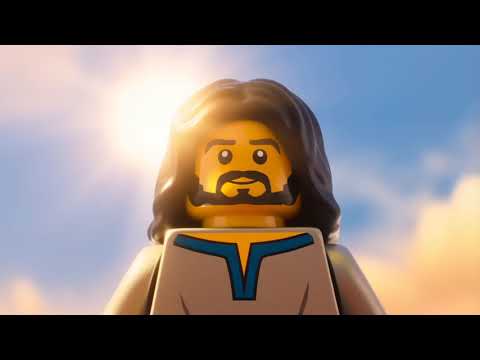
What Is Christmas? The Birth of Christ
For those of us who follow Christ, the answer to the question "What Is Christmas?" begins with the Gospel accounts of Jesus’ birth. The books of Matthew and Luke describe how Mary and Joseph traveled to Bethlehem, where Jesus was born and laid in a manger. Angels announced the news to shepherds, proclaiming “good news of great joy.” This event is the incarnation—God entering human history in the person of Christ to bring salvation and save people from their sins.
Christmas worship emphasizes this miracle. Churches hold services filled with Scripture readings, hymns, and nativity reenactments. The central message is that God’s light has come into the world, offering hope and redemption. For believers, Christmas is not merely a cultural holiday but a sacred reminder of divine love, given through God's Son, Jesus Christ.
A Seasonal Contrast
Let's look at the broader picture. To fully understand Christmas, we must also consider the winter solstice celebration, which occurs around December 21–22. The solstice marks the shortest day and longest night of the year in the Northern Hemisphere. Ancient cultures celebrated it as a turning point, a moment of renewal when the sun begins its return.
Many claim this is where Christmas actually came from. (But who actually believes Snopes anymore?) Let's look at what the winter solstice looked like.
- Pagan traditions such as Yule involved lighting fires, feasting, and honoring the rebirth of light.
- Roman Saturnalia, held in late December, featured gift-giving, social role reversals, and public festivities.
- Indigenous peoples across the world built monuments aligned with the solstice, underscoring its astronomical and spiritual importance.
I don't know about you, but that doesn't look much like Christmas. Sure, there's fire involved. But God's holiness is described as fire was established three millennia ago. Fire was considered a basic element in the world. This just means everyone appreciated fire.
Gift giving. Now that does it. The winter solstice is definitely Christmas. We get gifts for our birthday. Does that mean the day of our birth is tied to the winter solstice?
I think it's been a while since I built a monument on Christmas. Maybe next year. Maybe.

And then there's the date. It is close. December 25 is close to December 21, the time when the solstice occurs. Could this be proof positive that Christmas and the winter solstice are the same thing? Think again.
The date was chosen long before. Sextus Julius Africanus was an early historian. who proposed that Jesus was conceived on March 25. Nine months later placed His birth on December 25.
It is true that when early Christians chose December 25 to celebrate Christ’s birth, they did so in part to align with existing festivals. The solstice celebrated the return of the sun. It was sun worship, pagan through and through. But Africanus's calculations surely figured in as well.
What did Christmas celebrate? Christmas proclaimed the coming of the Son of God, not a pagan holiday. A real, personable God. Although there is overlap, the contrast is greater than the comparison. Just because people partied on December 21 doesn't mean God's people continued that tradition in their own way.
You see, the overlap allowed Christian worship to reinterpret themes of light and renewal in a distinctly theological way. It allowed the church to get a foot in the door and share Christ with people who didn't understand.
In other words, Snopes and others who claim the winter solstice is the same as Christmas need to get their information from somewhere else. Christianity put Christmas on December 25 strategically. They wanted to win a pagan world.
Christmas is a distinctive holiday. It shares similarities with the winter solstice. But anyone who claims they are the same simply doesn't understand the Christian faith.
Comparison: Solstice and Christmas
The history of Christmas reveals how the holiday evolved over centuries.
- Pre-Christian Europe: Solstice festivals celebrated fertility, survival, and the triumph of light.
- Roman Empire: Saturnalia influenced many customs later associated with Christmas, including feasting and gift exchange.
- 4th Century AD: The Church officially designated December 25th as the Feast of the Nativity, intertwining Christian theology with existing seasonal celebrations.
- Middle Ages: Christmas became a central feast in Christendom, blending liturgy with folk customs.
- Modern Era: Traditions such as Christmas trees (originating in Germany), Santa Claus (from St. Nicholas legends), and carols spread globally, merging sacred and secular practices.
This layered history explains why answering our original question, *What is Christmas?* involves both religious devotion and cultural adaptation. Christians didn't capitulate to culture. They used culture against itself, making what was profane holy by glorifying God rather than false gods and pagan practices.
Christmas is a distinct holiday. It is a Christian holiday.
| Aspect | Winter Solstice | Christmas |
|---|---|---|
| Date | Dec 21–22 | Dec 25 |
| Focus | Renewal, return of light | Birth of Christ, incarnation |
| Traditions | Fires, feasts, Yule logs | Church services, nativity, gifts |
| Symbolism | Triumph of light over darkness | God’s light entering the world |
Cultural Expansion

What about now? Has the culture taken Christmas back? Has it paganized it? Has it brought it back to its materialistic roots?
To answer this, let's look at a few developments.
Christmas has expanded beyond its strictly religious roots. In many societies, it has become a season of generosity, family gatherings, and festive decoration. Customs like hanging evergreen wreaths, exchanging gifts, decorating Christmas trees and singing carols reflect both ancient solstice practices and Christian symbolism.
But does the current overemphasis on the materialism of Christmas mean we should abandon it? Has it become a pagan holiday?
The answer is simple. It only does so when we let it. After all, the Bible is clear on what is sacred. It's all of life (1 Corinthians 10:31–33). If our motives are pure, and our actions are godly, we glorify God in everything we do (Colossians 3:17). If it isn't sin, do it to the glory of God, and you can't go wrong, even when it's something as simple as celebrating a day (Romans 14:6–8).
Even, Christian symbols, like Christmas trees, play a big part in the gospel meaning of Christmas. We've written about it right here, It's called The Story of the Christmas Tree.
Significance Today
So, what is Christmas in the modern world? It is a holiday celebrated by billions, combining sacred meaning with cultural traditions. For us as believers, it is the annual reminder that God entered human history in Jesus Christ.
Importantly, for centuries Christians have celebrated the birth of Christ on December 25th, affirming the hope and joy of God’s presence among humanity. While customs vary, the heart of Christmas remains the same. It's the proclamation of “good news of great joy” that Christ has come into the world.
He was born to die on a cruel cross so that we could have salvation. Only through that one name can we be saved. The Christ-child was also Savior and Lord.
So What Is Christmas Really?
Hopefully, we celebrate Christmas just like every other day of the year.
Hopefully, we give Christ His due the other 364 days of the year.
Hopefully, we are faithful followers of Jesus Christ whether it's December 25 or beyond.
What is Christmas? It's a time to practice what we should be doing all year round. Praising our God for what He has done through His Son Jesus Christ.
Jesus is the reason for the season. God bless.

Maybe you can't go home, but you can still go to the homepage!
Full disclosure: As an Amazon Affiliate, links to Amazon may earn Biblephoria.com a commission on qualifying purchases. This is just one of the things we do to support this cause. Thank you for your support.
Please Support Us
Your gift helps fund Biblephoria's free online courses and study materials.
Give NowRecent Articles


-
How Do I Obey God? Lesson 3
May 26, 26 08:41 PM
 How do I obey God? I mean, if I want to do it right, where do I start? Is there a right or wrong answer to this? Let's find out together.
 -
Can God Forgive My Sins?
May 19, 26 06:11 PM
Can God forgive my sins? Can He scrub away the guilt I feel and give me what I need? Forgiveness? Let's discover the answer to these questions together. -
Why Do I Feel Guilty?
May 07, 26 12:48 AM
Have you ever wondered "Why do I feel guilty?" Guilt is a constant in the human condition. But where does it come from? What takes it away? Let's find out.




Find our Privacy Policy and User Agreement here.