
Please Support Us
Your gift helps fund Biblephoria's free online courses and study materials.
Give Now- Home
- Free Online Bible Study Courses
- What is the Great Commission?
- The Great Commission in Matthew
The Great Commission in Matthew: The Baseline -- Lesson 1
What is the Great Commission in Matthew? How is it different from other gospel records? That's what we begin to tackle in Lesson 1 of this study.
Before we begin, don't forget about the quiz at the end of the lesson. It will really help you absorb the material better.
Let's begin.
The Great Commission in Matthew (Matthew 28:16–20)
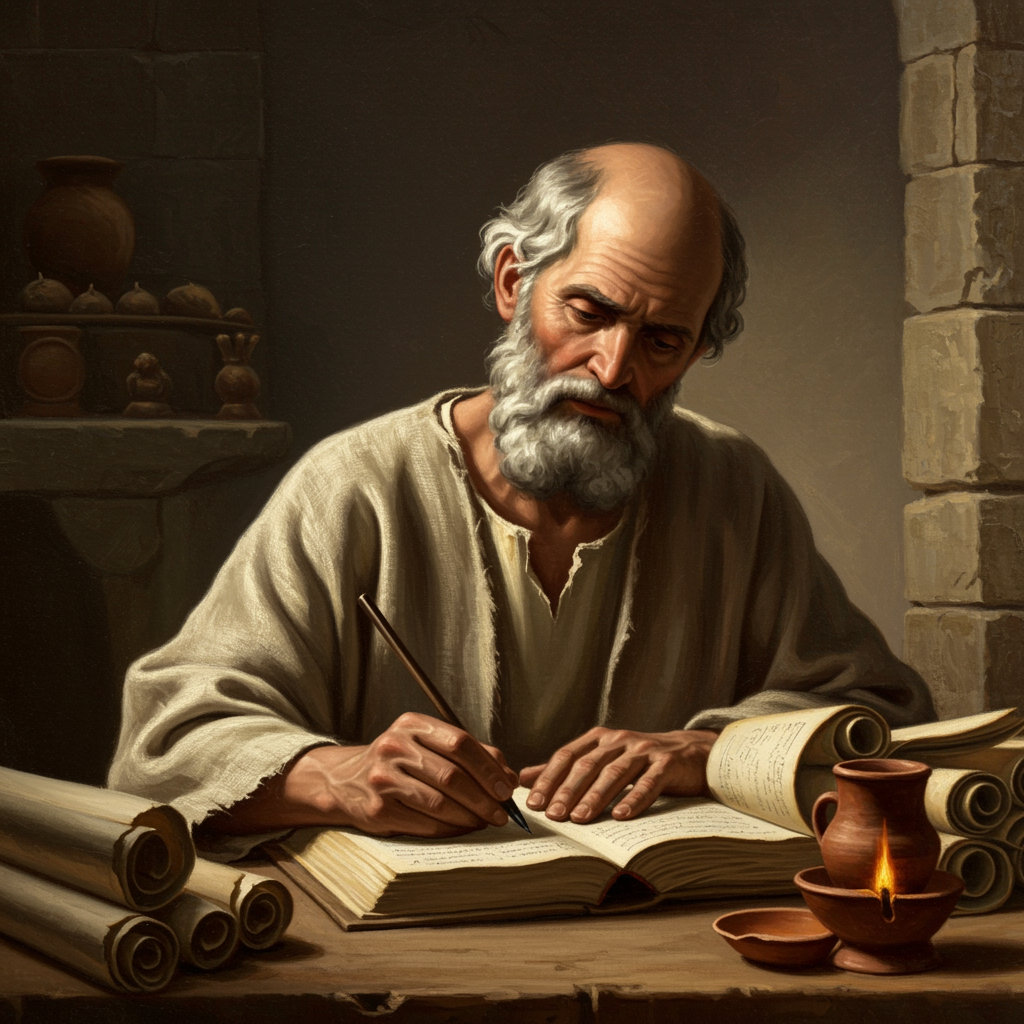
Matthew’s account stands as the classic Great Commission passage. It's true, other examples give details that Matthew doesn't. Matthew is the one that give the most detail and the clearest overarching instruction.
Here's how it happened. After His resurrection, Jesus met His disciples on a mountain in Galilee. Jesus didn't randomly pick this place. It's the kind of setting that recalls earlier moments of revelation.
Here, the Great Commission in Matthew highlights Christ's authority as the promised King (Matthew 5:1; 17:1–8; 28:16–17). Even though some still struggled with doubt, He addresses them as the risen Lord who now possesses universal authority (Matthew 28:17).
With this in mind, let's pick apart the Great Commission according to Matthew and see what we can see.
The Declaration
Jesus begins with a declaration rather than a command. What was that declaration? It was a declaration of authority. But this wasn't just earthly authority. It was "all authority" that anchored itself in "heaven and earth." (Matthew 28:18).
What does this prove?
- First, it establishes the foundation for Christ's mission. His mission rests not on human initiative but on His royal rule.
- It also reveals who has the authority to issue orders. It's Jesus alone who builds His church and instructs it in the right ways (Matthew 16:18).
The Command
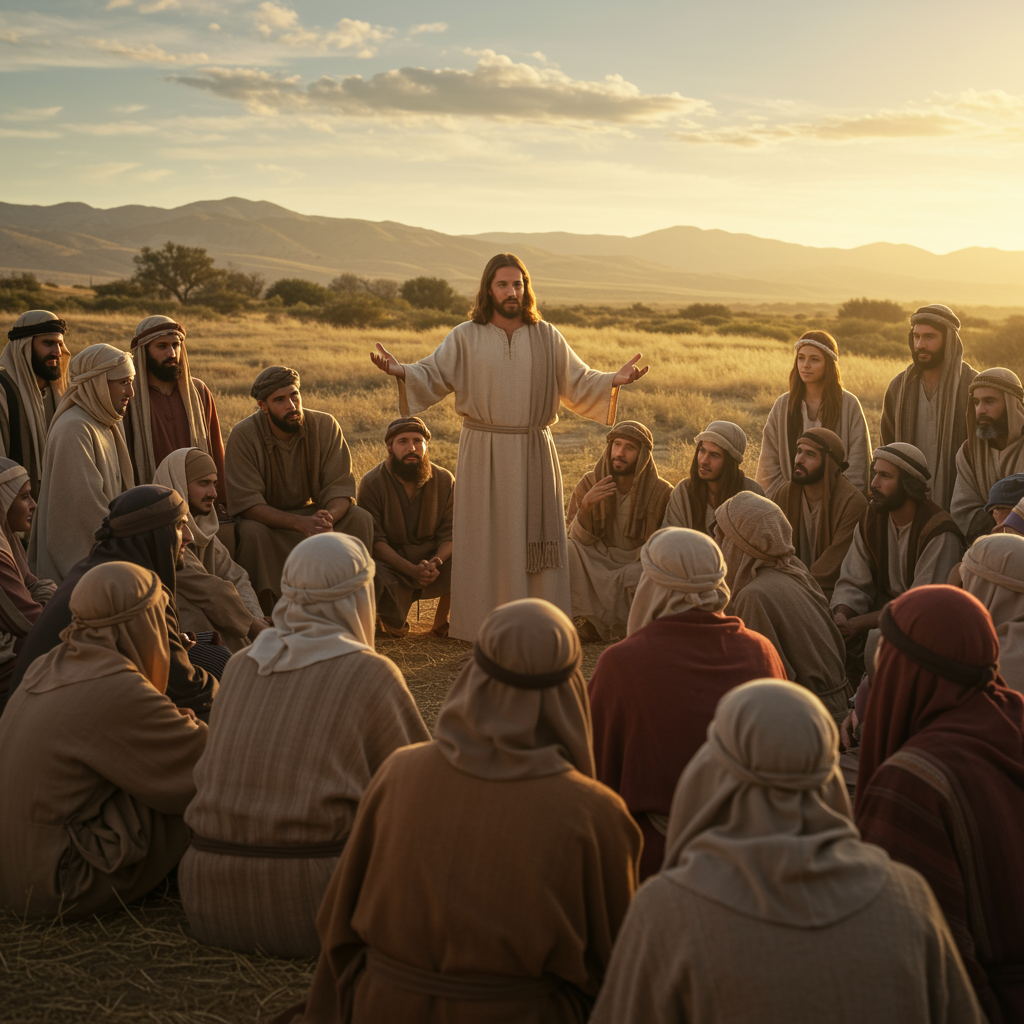
On that basis, Jesus issues the central charge to “Go.” The assumption is that the disciples are already mobile. So although "Go" is part of the command, it also describes the context of the command, "As you are going."
What was the main command? It was to "make disciples."
So putting it all together, so far we have "Go! And as you do, make disciples." What does this mean?
The idea is that the church was to reproduce itself. Jesus wanted to see His church thrive through every generation. The way to do that was to "make disciples."
The assumption was the disciples would do this the same way Christ had made disciples out of them. Although we aren't using it as a Great Commission passage, the Gospel of Mark is very helpful with context. Preaching was Christ's preferred method of delivery (Mark 1:38). He taught His disciples the same habit (Mark 3:14).
And what was the message that they would preach? The same message Jesus proclaimed. They would "make disciples" by preaching the gospel (Mark 1:14).
And where were they to go? The answer is clear. The scope of the command is “all nations.” This points beyond the Jews. This part of the command fulfilled God’s promise to Abraham that his offspring would be a blessing to all the families of the earth (Genesis 12:1–3; Galatians 3:8).
In other words, the gospel had to be preached to the whole human race. God wanted everyone to hear so that they would be without excuse (Romans 1:20; c.f. Romans 2:1). That means that the gospel of Jesus Christ would ultimately have to canvas the Earth.
At last, we have the full command. What does it look like?
"Go, and as you do, make disciples by preaching the gospel to the whole world."
What is the Great Commission in Matthew? It's obvious. It's a clear command to the church to reproduce itself all over the world.
The Completion
That was only the beginning. The church would not only need evangelistic fervor but also consistent teaching after evangelism. Some call this discipleship. The Great Commission in Matthew includes both evangelism and discipleship.
This phase is carried out through baptizing and teaching (Matthew 28:19–20). What do these look like?
Baptism refers to water baptism.
What does it do?
- First, it identifies converts with the one true God. Baptism is more than a bath. It's a public profession of faith (Matthew 28:19).
- Second, it shows that new believers have a new identity in the community we call the church. Those baptized now have the Holy Spirit and belong to Christ as well as the Christian community (c.f. Galatians 3:27; Ephesians 4:5).
Baptizing these new disciples includes an important formula. They are baptized in the name of the Triune God. This includes the name of the Father, Son and Holy Spirit.”
This reference reminds us who God is. He is one God yet three Persons. We call this the Trinity. This formula shows us the equality of deity of all three Persons. We are baptized into one God who is also equally three divine Persons.
Then comes teaching. This could also be described as discipleship. Unfortunately, that word has been so overly used that it's lost a lot of its meaning. So we'll stick with the idea of teaching as the main idea behind passing on the faith to other believers.
Teaching them to observe everything Jesus commanded shows that mission is about lifelong obedience and formation. It isn't merely decisions or one‑time professions. It's about committing everything to Christ (Matthew 7:24–27; 28:20).
The Comforting Farewell
As important as all this is, there's one more very important element to the Great Commission in Matthew. He reveals a promise. Christ assures us that He will be with us to the very end.
Why did Christ append this to His instructions? The answer is simple.
This comforting thought assures us that the Lord who sends us also goes with us. As we preach the truth in whatever form is necessary, we know that Jesus is with us always (Matthew 28:20).
| Part of the passage | Main emphasis | Mission takeaway |
|---|---|---|
| “All authority… has been given to Me.” (v. 18) | Jesus claims universal authority in heaven and on earth. | Mission rests on Christ’s royal authority, not our ideas or power; He has the right to direct His church. |
| “Go therefore and make disciples of all nations…” (v. 19) | The central command is to make disciples, with “going” as the context and “all nations” as the scope. | The church must reproduce itself by making disciples among every people group, not just our own. |
| “…baptizing them in the name of the Father and of the Son and of the Holy Spirit” (v. 19) | Baptism marks public identification with the Triune God and entry into the visible community of believers. | New disciples are to be baptized into the one Name of the Trinity, signaling a new identity in Christ and His church. |
| “…teaching them to obey everything I have commanded you” (v. 20) | Discipleship is lifelong instruction in obeying all that Jesus commanded, not just one‑time decisions. | The mission includes ongoing teaching and formation, so believers grow in whole‑life obedience to Christ. |
| “I am with you always, to the end of the age.” (v. 20) | Jesus promises His abiding presence with His church as it carries out this mission. | We pursue the Great Commission with confidence, knowing the risen Lord goes with us until the mission is complete. |
Why Is the Great Commission in Matthew So Important?
Here's the bottom line for this lesson:
Christ is Lord and has every right to call His church to growth and health.
If anyone ever questions whether the Great Commission is for today, just tell them that the church would never survive without it. It exists, so we, the church, exist. It's as simple as that.
God bless.
The Great Commission in Matthew
Review Matthew’s baseline Great Commission: Christ’s authority, the call to make disciples, and His promise to be with His church.
Your Progress
- Jesus claims all authority in heaven and on earth.[web:31]
- The command is to make disciples of all nations, baptizing and teaching.[web:31]
- Christ promises to be with His church to the very end.[web:31]

Ready for more? Click here to go to the next lesson.
The main GC page is here.
Looking for homebase? How about our homepage instead?
Full disclosure: As an Amazon Affiliate, links to Amazon may earn Biblephoria.com a commission on qualifying purchases. This is just one of the things we do to support this cause. Thank you for your support.
Please Support Us
Your gift helps fund Biblephoria's free online courses and study materials.
Give NowRecent Articles


-
How Do I Obey God? Lesson 3
May 26, 26 08:41 PM
 How do I obey God? I mean, if I want to do it right, where do I start? Is there a right or wrong answer to this? Let's find out together.
 -
Can God Forgive My Sins?
May 19, 26 06:11 PM
Can God forgive my sins? Can He scrub away the guilt I feel and give me what I need? Forgiveness? Let's discover the answer to these questions together. -
Why Do I Feel Guilty?
May 07, 26 12:48 AM
Have you ever wondered "Why do I feel guilty?" Guilt is a constant in the human condition. But where does it come from? What takes it away? Let's find out.





Find our Privacy Policy and User Agreement here.