
Please Support Us
Your gift helps fund Biblephoria's free online courses and study materials.
Give Now- Home
- Free Online Bible Study Courses
- What is the Great Commission?
- The Great Commission in Luke and Beyond
The Great Commission in Luke and Beyond -- Lesson 2
So we've already seen how important Jesus' last words were in Matthew. But what about the other accounts? What about the Great Commission in Luke and other places? Are they different? Or are they just redundant accounts of Jesus' words?
We're tackling these questions next. Before we do, if you haven't taken Lesson 1 of this mini-course, make sure you click here to do so. It's important to build a solid foundation with the first lesson before you take Lesson 2.
Also, we've placed a quiz at the end to help test how much you remember. You don't have to take the quiz. But it would be very helpful because testing helps you remember a lot more.
With that, let's focus on the Great Commission in Luke and other accounts.
The Great Commission in Luke and Other Places
Luke: Repentance and Forgiveness to All Nations (Luke 24:44–49)
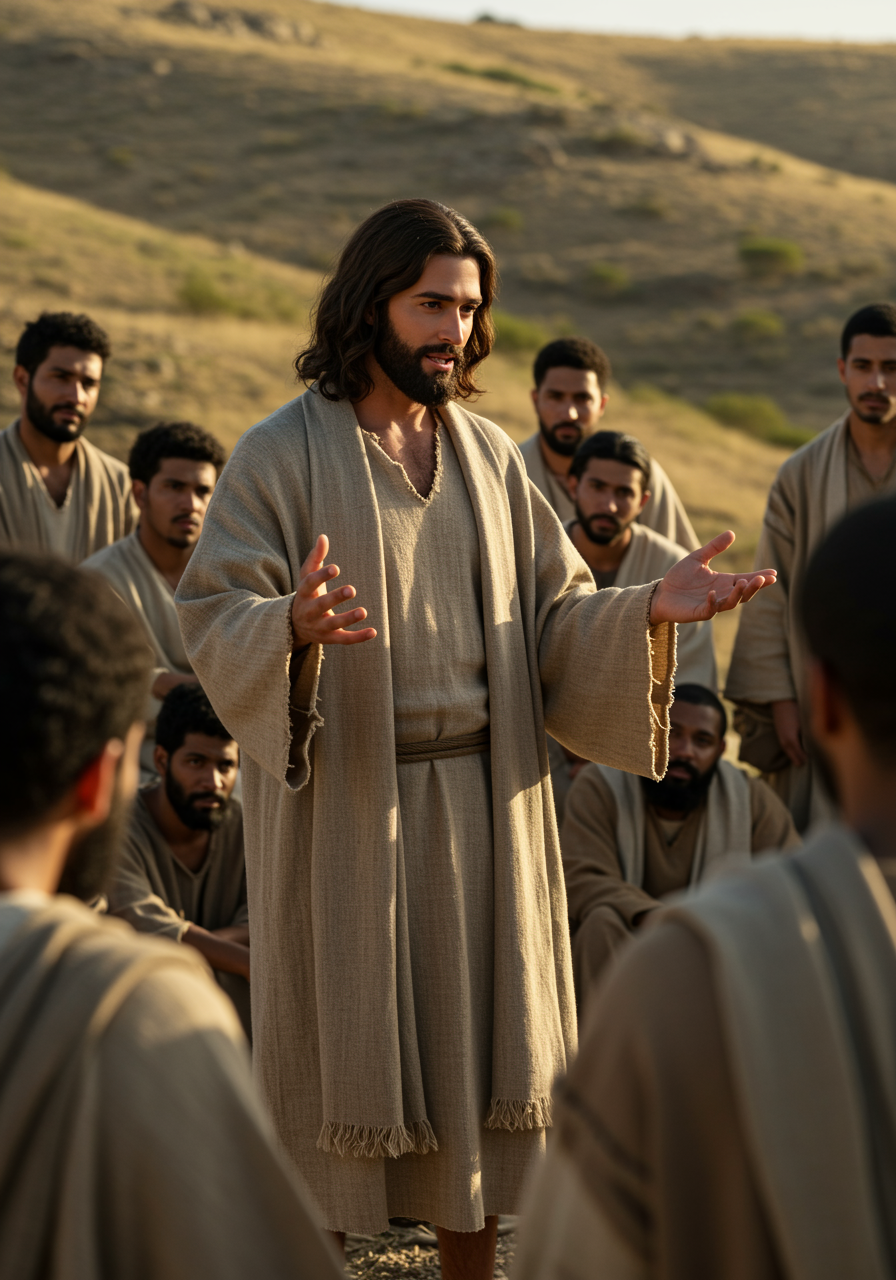
We've already seen how Matthew recorded the most detailed account of Jesus' last words to His disciples. But what about the Great Commission in Luke? Is it different? Let's dig a little and find out.
The Great Commission in Luke emphasizes the storyline of Scripture. It contains the core content of the gospel message.
As the account unfolds, the risen Jesus opens the minds of His disciples so that they can understand how the Scriptures point to the truth of who He is. They naturally lead to an understanding of His suffering, resurrection, and the global proclamation that follows (Luke 24:44–46). Mission is presented as the fulfillment of God’s long‑planned purposes, not a new or optional idea.
He summarizes the message as one that leads to repentance and forgiveness of sins. This very important theme must be proclaimed in the name of Jesus, revealing the authority the message carries.
Jesus emphasizes the fact that this ministry will begin in Jerusalem but won't stop there. It must be proclaimed to "all nations" (Luke 24:47).
Notice how Luke highlighted repentance, forgiveness, and proclamation in His account. Those are details Matthew didn't specifically mention. Matthew said, "make disciples," but didn't necessarily say how. Luke gives us the "how."
What does Luke mean by these details? He's insisting that the heart of Christian mission is announcing Christ and calling people to turn to Him for mercy (Luke 13:3; Acts 2:38). The mission begins in Jerusalem but is destined to reach “all nations.”
This is where Luke overlaps with Matthew but adds a little color. He joins Matthew’s universal horizon with a specific starting point (Luke 24:47; Acts 1:8).
This shows us something important. The Great Commission in Luke isn't a redundancy. It provides breadth to the detailed account that Matthew gave. This is why it's so important to study all parallel accounts when doing Bible study.
But Luke doesn't stop there. Jesus calls His followers “witnesses of these things” (Luke 24:48). What things is He speaking of? The disciples witnessed Jesus' ministry from beginning to end. Because of this, they would become those who would offer testimony to all the miracles He did. They were witnesses of His death and resurrection as the Scriptures foretold them.
Yet they aren't to charge ahead on their own. They must wait in the city until they are provided with "power from on high.” God honored this promise at Pentecost when the Holy Spirit was poured out (Luke 24:49; Acts 1:4–5; 2:1–4).
In a vivid way, the Great Commission in Luke links Jesus' last words tightly to both biblical revelation and the empowering work of the Spirit.
John: Sent as the Father Sent the Son (John 20:19–23)

John’s Gospel presents the Commission in relational terms. He was about to send them on a very important mission.
On the evening of the resurrection, Jesus appeared to His fearful disciples behind locked doors. What did He say? He spoke peace to them and showed them His hands and side to prove who He was. This turned their fear into joy because they had seen Jesus alive (John 20:19–20). This intimate scene frames the sending words that follow.
What was the central idea? It was the fact that He would send the disciples out (John 20:21). His own mission from the Father immediately became the pattern for theirs. The disciples would be Christ-like in life and ministry.
John's retelling of the Great Commission reminds us of something important at this point. The church is sent into the world in the same direction and spirit as the Son. That means we should take on this burden with humility, obedience to the Father, love for the lost, and a willingness to suffer for the sake of the truth (John 3:16–17; 17:18).
Jesus, then, did something interesting. He breathed on them and said, “Receive the Holy Spirit.” Why did He do this? Well, it signaled that the disciples' mission would only be effective in one way. They would have to be empowered and animated by the Spirit (John 20:22; cf. John 14:16–17; 16:7–15).
It's interesting to note that John’s Commission also includes a sobering word about forgiveness and judgment. Jesus explained that the disciples would be allowed to forgive or refuse to forgive sins.
Hmmmm. That's interesting because the Bible seems clear that only God can forgive sins (c.f. Matthew 9:2–6). Then what was Jesus talking about here?
The answer is simple. This doesn't grant independent authority to decide who is saved and who isn't. It sounds a little like that, but it doesn't give the disciples apostolic authority over sin.
What it does do is underscore that through the church’s faithful witness to the gospel, God forgives sins when people believe in faith. If they don't, they receive no forgiveness (cf. Luke 10:16; Acts 13:38–41). Preaching the gospel is that important. In this way, John stresses both the privilege and the gravity of representing Christ in the world.
Acts: Spirit‑Empowered Witness to the Ends of the Earth (Acts 1:4–8)
The book of Acts opens forty days after Jesus’ resurrection. At that time, He spoke to His disciples about the kingdom of God. What they didn't fully realize was that Jesus was preparing them for their worldwide mission (Acts 1:1–3).
He then instructed them to stay in Jerusalem and wait for “the promise of the Father.” What was that promise? It was the Holy Spirit.
The baptism with the Holy Spirit would come soon (Acts 1:4–5). When they asked about the timing of the kingdom’s restoration to Israel, Jesus redirects their concern from schedules to their calling (Acts 1:6–7).
Acts 1:8 functions as the main statement of the book. Jesus explained that the disciples would receive power from the Holy Spirit. This would give them the motivation to provide witness of Him “in Jerusalem, and in all Judea and Samaria, and even to the remotest part of the earth.”
You can see what's going on here. His statement emphasizes Spirit‑given power for witness. It also focuses on the outward movement of the gospel from local to global. The geographic sequence from Jerusalem forward provides a rough outline for the narrative that follows (Acts 1–7; 8–12; 13–28).
In this way, Acts gathers and extends all the Gospel commissions. It provides a deeper picture of the church's responsibility.
What is that responsibility? It must testify that Christ is risen and that He is Lord.
The message would also have to cross every boundary the Spirit opened (Acts 2:32; 4:19–20; 13:47). The same Jesus who commanded them to wait for power also sent them out to speak boldly in His name before both crowds and kings (Acts 4:29–31; 9:15; 26:19–23).
| Passage | Main emphasis | Mission takeaway |
|---|---|---|
| Luke 24:44–49 | Repentance and forgiveness of sins proclaimed in Jesus’ name to all nations, beginning from Jerusalem.[web:118][web:109] | The church announces Christ from Scripture and calls people everywhere to turn to Him for mercy.[web:110] |
| John 20:19–23 | Jesus sends His disciples as the Father sent Him and breathes the Holy Spirit on them.[web:70][web:122] | We are sent like Jesus—Spirit‑empowered, bearing a message by which God truly forgives or withholds forgiveness.[web:126] |
| Acts 1:8 | Spirit‑given power to be witnesses in Jerusalem, Judea and Samaria, and to the ends of the earth.[web:71][web:77] | Mission moves outward—local to global—as the church testifies about the risen Christ to every kind of people.[web:80][web:86] |
So What Does the Great Commission in Luke and Other Accounts Tell Us?

The Great Commission in Luke, John and Acts reveal a complete picture of the Father's plan and Jesus' last words. The disciples would have understood these as immediate and necessary commands. This fact will surface in our next lesson.
For now, let's just remember how specific Jesus was in His commands. He left nothing up to the imagination. That's the reason why we have four versions of it. In this way we get the fullest picture of what Jesus actually said.
But let's remind ourselves of one very important fact. This isn't just about the Great Commission in Luke, John, Acts or even Matthew. This is about how the church continues to flourish.
Jesus' words weren't suggestions. They were commands that we must continue to execute even at this late date. May we be diligent in our understanding and execution of the Great Commission.
The Great Commission in Luke, John, and Acts
Test what you’ve learned about repentance and forgiveness in Luke, being sent as the Son in John, and Spirit‑empowered witness in Acts.
Your Progress
- Luke: repentance and forgiveness proclaimed to all nations, beginning from Jerusalem.[web:66]
- John: “As the Father has sent Me, I also send you” and “Receive the Holy Spirit.”[web:70]
- Acts: Spirit‑given power to be witnesses from Jerusalem to the ends of the earth.[web:71][web:77]

Need the next lesson? Click here for Lesson 3.
Want a different lesson? Go back to the main GC page.
If home is where the heart is, then the homepage is the PLACE!
Full disclosure: As an Amazon Affiliate, links to Amazon may earn Biblephoria.com a commission on qualifying purchases. This is just one of the things we do to support this cause. Thank you for your support.
Please Support Us
Your gift helps fund Biblephoria's free online courses and study materials.
Give NowRecent Articles


-
How Do I Obey God? Lesson 3
May 26, 26 08:41 PM
 How do I obey God? I mean, if I want to do it right, where do I start? Is there a right or wrong answer to this? Let's find out together.
 -
Can God Forgive My Sins?
May 19, 26 06:11 PM
Can God forgive my sins? Can He scrub away the guilt I feel and give me what I need? Forgiveness? Let's discover the answer to these questions together. -
Why Do I Feel Guilty?
May 07, 26 12:48 AM
Have you ever wondered "Why do I feel guilty?" Guilt is a constant in the human condition. But where does it come from? What takes it away? Let's find out.





Find our Privacy Policy and User Agreement here.