
Please Support Us
Your gift helps fund Biblephoria's free online courses and study materials.
Give Now- Home
- What Are Christian Holidays?
What Are Christian Holidays?
So what are Christian holidays? Are they just another day that people make a big deal about for no reason? Or are they special days that hold great meaning? Let's find out?
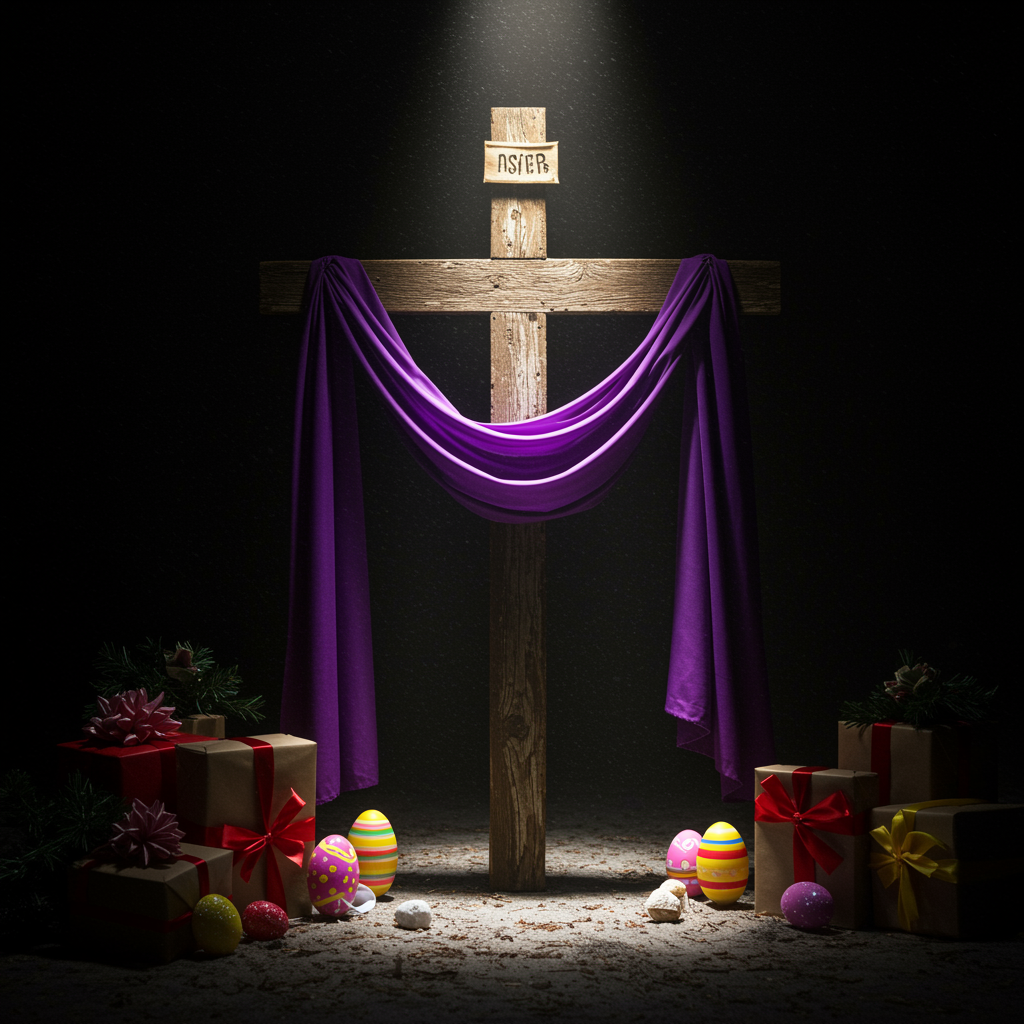
This page is stuffed with information on why we should and should not celebrate holidays. Answering the question, "What are Christian holidays?" is a much more complex subject than we may think.
After we've finished this discussion, we'll provide links to several holidays, explaining what they are and why Christians through the ages have celebrated them. We won't cover every holiday, but we'll go into detail on the major ones.
Before we get into our subject, we have provided resources on this page to help you. We've created a chart with all the information you need to digest the content. Don't forget to bookmark this page first so that you can come back and read the full content.
Ready? Okay. Let's go.
What Are Christian Holidays?
Christian holidays are special days the church uses to remember God’s saving work in Jesus Christ. Originally, a holiday was simply a "holy day" of worship and reflection. In fact, our word "holiday" comes from an Old English word for "holy day."
These days give shape to the Christian year. They help us reflect on the birth, life, death, resurrection, and reign of Christ. While these days can be meaningful and spiritually rich, Scripture also reminds us that the heart of worship matters more than the calendar itself.
There's no command for Christians to celebrate certain days as "holidays." Jesus did implement seasons of remembrance in the form of communion (Matthew 26:26–29; c.f. 1 Corinthians 11:23–29), and we're to continue to meet together as a church (Hebrews 10:24–25; c.f. Matthew 18:20; Acts 2:42–47; Acts 20:7; 1 Corinthians 16:2). But there isn't a specific command for say Christmas or Easter.
That's where we're going next.
A Short Word From Paul About Days and Seasons
Paul addresses the question of special days in Romans 14:5–6. He writes that one person esteems one day above another. Another esteems every day alike.
What does this mean?
His point in Romans 14:5–6 is simple. Christians have freedom in how they observe days. Each person should be convinced in their own mind. We have no right to judge each other in how we celebrate any given day. What matters is honoring the Lord in whatever we choose to do.
In other words, it's perfectly acceptable with God to celebrate holidays. It's also perfectly fine to NOT celebrate holidays. God leaves it up to our individual consciences to decide. Anything more than this is legalism.
Other passages echo this same spirit of freedom (Colossians 2:16–17; Galatians 4:9–10). Christian holidays are not obligations but opportunities. They stand as moments that can help us remember Christ with gratitude and joy.
Why Christians Celebrate Holidays
Throughout history, Christians have used holidays to retell the story of redemption. These celebrations help us slow down, reflect, and enter into the rhythms of Christ’s life and ministry.
Some traditions follow a detailed liturgical calendar. Others observe only a few major days. All of these practices fall under the umbrella of Christian liberty.
The purpose of these holidays is not to add burdens but to point us to Christ. We can never remind ourselves enough of His coming, His sacrifice, His victory, and His ongoing work in the world. And whose to say we can't have a little fun in the process!
A Calendar of Major Christian Holidays
So what are Christian holidays? They are more than dates on a calendar. They are experiences for the Christian life. They remind us how important Christ is to us.
To help you better use these reminders, we've provided a calendar. It doesn't have dates, but it does outline what Christian holidays look like.
Mind you, not every Christian celebrates every one of these. In fact, I would say most people I know haven't even heard of these, let alone celebrated them.
Why have we outlined them here? Maybe you want to start a new tradition that helps you with your Christian walk. If so, we've provided this list to introduce you to something new.
This list isn't comprehensive, but it is short on details. We've simply provided a synopsis. Some holidays we've expanded on. Some will just be brief blurbs that you can research yourself. Either way, we've provided these for your spiritual enrichment.
What are Christian holidays? Scroll down and find out!
The Birth of Christ
- Advent -- A season of anticipation leading up to Christmas, focusing on hope, waiting, and the promises of God.
- Christmas -- The celebration of Jesus’ birth — God with us — and the mystery of the Incarnation.
- New Year / Watch Night -- A moment to reflect on God’s faithfulness and dedicate the coming year to Him.
- Epiphany -- A celebration after Christmas the reminds us that God has been revealed through Jesus Christ, His Son.
The Ministry and Passion of Christ
- Lent -- A season of repentance and preparation leading toward the cross and resurrection.
- Holy Week -- The final week of Jesus’ earthly ministry, including Palm Sunday, Maundy Thursday, and Good Friday. We've also prepared a devotional just for you for this special week.
- Easter -- The celebration of Christ’s resurrection — the center of the Christian faith and the victory over sin and death.
The Ascension and the Spirit
- Ascension Day -- Remembering Jesus’ return to the Father and His ongoing reign as Lord.
- Pentecost -- Celebrating the outpouring of the Holy Spirit and the birth of the church.
The Life of the Church
- Ordinary Time -- The long season after Pentecost, focusing on spiritual growth and the everyday life of discipleship.
- All Saints’ Day -- A day to remember believers who have gone before us and to celebrate the unity of the church across time.
- Christ the King Sunday -- A reminder that Jesus reigns over all creation and will return in glory.
- Sanctity of Life Month -- A month dedicated to protecting innocent life in peril.
| Category | Holiday | Meaning |
|---|---|---|
| The Birth of Christ | ||
| Advent | A season of anticipation focusing on hope, waiting, and God’s promises. | |
| Christmas | The celebration of Jesus’ birth — God with us — and the mystery of the Incarnation. | |
| New Year / Watch Night | A time to reflect on God’s faithfulness and dedicate the coming year to Him. | |
| The Ministry and Passion of Christ | ||
| Lent | A season of repentance and preparation leading toward the cross and resurrection. | |
| Holy Week | The final week of Jesus’ earthly ministry: Palm Sunday, Maundy Thursday, Good Friday. | |
| Easter | The celebration of Christ’s resurrection and His victory over sin and death. | |
| The Ascension and the Spirit | ||
| Ascension Day | Remembering Jesus’ return to the Father and His ongoing reign as Lord. | |
| Pentecost | Celebrating the outpouring of the Holy Spirit and the birth of the church. | |
| The Life of the Church | ||
| Ordinary Time | The long season after Pentecost, focusing on spiritual growth and everyday discipleship. | |
| All Saints’ Day | Remembering believers who have gone before us and celebrating the unity of the church. | |
| Christ the King Sunday | A reminder that Jesus reigns over all creation and will return in glory. | |
How These Holidays Point to Christ
Every Christian holiday ultimately tells part of the same story: God’s love revealed in Jesus Christ. From His birth to His resurrection, from the sending of the Spirit to the hope of His return, the Christian year invites us to remember the gospel again and again.
These days are not ends in themselves. They are signposts pointing us to the Savior.
So What Are Christian Holidays?
Let's answer our question, "What are Christian holidays?" They aren't "Christian vacations." In fact, they're just the opposite. They keep us working at the Christian life.
You see, God went to all the trouble of planning salvation and sending His Son (John 3:16). Jesus went to all the trouble of dying on a cross, fulfilling the Father's plan (Isaiah 53:1-6). Why wouldn't we want to use markers to remind us of these wonderful truths?
One caveat: Be very careful that these celebrations don't become just another reason to party or a dead religious exercise. When that happens, it would be better to dispense with the day and remember Christ's work for what it is: a wonderful expression of God's love (1 John 4:9–10).
You see, it isn't the day that's important. It's what God has done that's important. It's about His glory alone.
And we should strive to give Him that glory always. God bless.

Home is where the heart is. So why not go to the homepage?
Need more free courses? Click here to find more!
Full disclosure: As an Amazon Affiliate, links to Amazon may earn Biblephoria.com a commission on qualifying purchases. This is just one of the things we do to support this cause. Thank you for your support.
Please Support Us
Your gift helps fund Biblephoria's free online courses and study materials.
Give NowRecent Articles


-
How Do I Obey God? Lesson 3
May 26, 26 08:41 PM
 How do I obey God? I mean, if I want to do it right, where do I start? Is there a right or wrong answer to this? Let's find out together.
 -
Can God Forgive My Sins?
May 19, 26 06:11 PM
Can God forgive my sins? Can He scrub away the guilt I feel and give me what I need? Forgiveness? Let's discover the answer to these questions together. -
Why Do I Feel Guilty?
May 07, 26 12:48 AM
Have you ever wondered "Why do I feel guilty?" Guilt is a constant in the human condition. But where does it come from? What takes it away? Let's find out.






Find our Privacy Policy and User Agreement here.