
Please Support Us
Your gift helps fund Biblephoria's free online courses and study materials.
Give Now- Home
- What Are Christian Holidays?
- What Is a New Year Resolution?
What Is a New Year Resolution?
Have you ever made a new year resolution? Don't see the point? Maybe you've made one before and didn't keep it. Why try?
What Is New Year’s Day?
New Year’s Day marks the beginning of a new calendar year. It's a moment recognized across cultures and throughout history. There’s the Gregorian New Year on January 1, the Lunar New Year in East Asian cultures, Rosh Hashanah in Jewish tradition, and countless other cultural observances. People instinctively treat the turning of the year as a time for reflection, renewal, and hope.
Christians participate in this rhythm as well. While Scripture does not command a New Year celebration, the practice naturally aligns with biblical themes. The Bible tells us it’s important to number our days (Psalm 90:12), reflect on God’s faithfulness (Lamentations 3:22–23), and seek fresh obedience in the year ahead (Romans 12:1–2). New Year’s Day becomes a cultural moment that invites spiritual attentiveness.
What Is a Resolution?

A resolution is a determined intention. It's a commitment to live differently, pursue growth, or change direction. People make resolutions because they sense the need for renewal. They want to become healthier, wiser, more disciplined, and more faithful.
In short, they want to grow.
At its core, a resolution expresses desire and determination. But for Christians, it also raises deeper questions:
- What kind of change truly matters?
- Where does the power for lasting transformation come from?
- How do we align our intentions with God’s will rather than mere self‑improvement?
- How do we glorify God through it all?
This is where Christian history gives us a helpful example.
Jonathan Edwards and the Practice of Resolutions
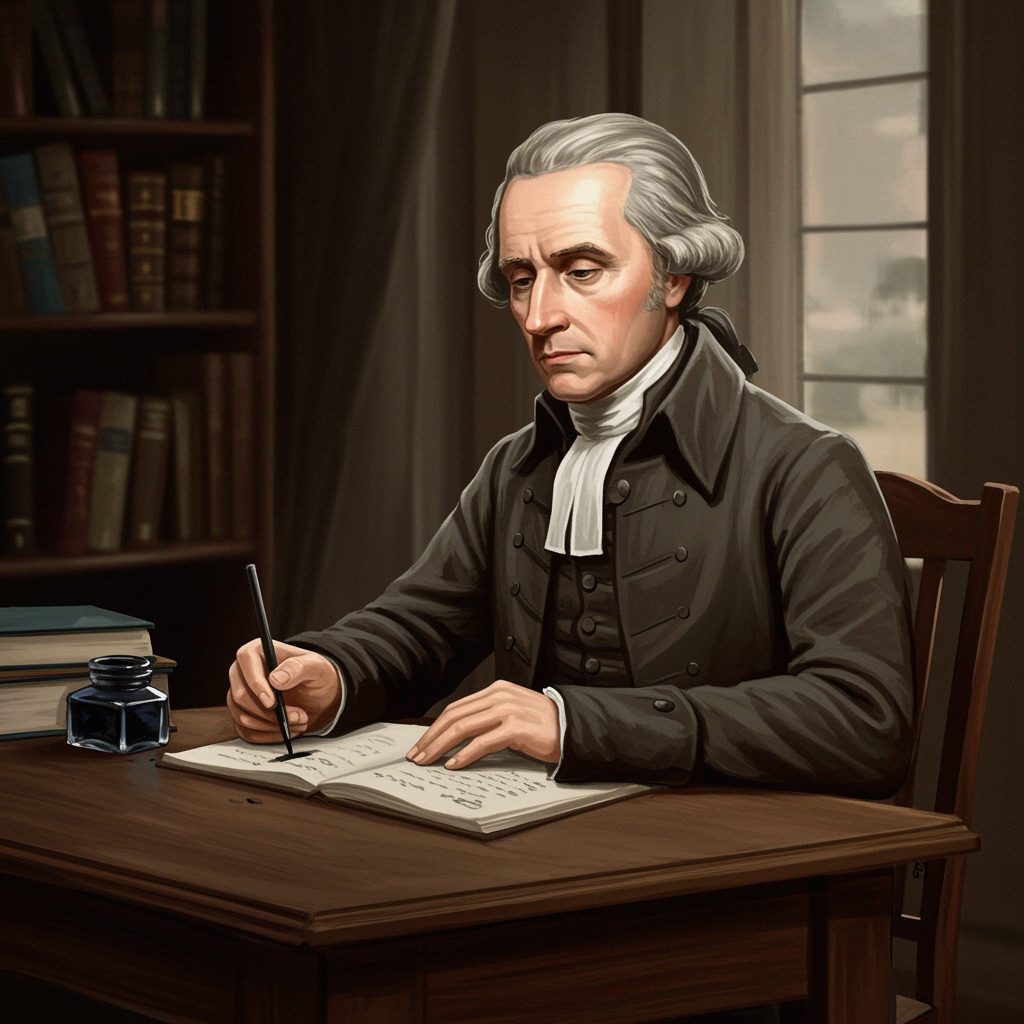
Jonathan Edwards, the 18th‑century pastor and theologian, is famous for his set of seventy resolutions. Surprisingly, Edwards wrote these mostly in his late teens and early twenties. They were not casual goals or seasonal aspirations. They were earnest commitments shaped by Scripture, aimed at living wholly for the glory of God.
A few themes stand out in Edwards’ approach that we can learn from:
- Seriousness — He viewed life as a stewardship before God.
- Dependence — Many resolutions explicitly acknowledge his inability to keep them without divine help.
- Holiness — His aim was not self‑improvement but Christlikeness.
- Eternity — He resolved to live with the end in view, measuring his days by eternal significance.
Edwards’ resolutions were NOT about becoming a “better version of himself.” They were about aligning his entire life with the glory of God. Because he committed himself to these lifelong pursuits, he accomplished a lot for the glory of God.
Biblical Foundations for God‑Centered Resolve
Scripture consistently calls believers to intentional, determined obedience. This has nothing to do with earning God’s favor. It's a response to His grace.
Here are a few key passages:
- Psalm 90:12 — The turning of the year invites sober reflection and wise resolve.
- 1 Corinthians 10:31 — The ultimate aim of every resolution.
- Philippians 3:13–14 — Christian resolve is forward‑leaning and Christ‑centered.
- Colossians 3:1–3 — Resolutions begin with reoriented affections.
- Proverbs 16:3 — Our commitments find stability only in God’s hands.
The Bible affirms the value of resolve. It also exposes the limits of human strength. If we have to resolve by the grace of God, we realize how dependent we really are.
Why the Gospel Matters for Every Resolution
All this means the gospel is not another self‑help text. It isn't an "As seen on TV!" motivational tool. It's the announcement that God has acted in Christ to save, renew, and transform His people from the inside out. So a truly new year resolution only works if it's energized by God through His Word.
This means:
- We don’t change ourselves. God changes us. Any resolution that depends solely on human willpower will eventually collapse. Just ask most people a few weeks into the new year. They'll tell you! God gives life, and Christ brings victory (Galatians 2:20; Romans 6:3–8).
- The Spirit empowers what the heart desires. True transformation flows from new affections, not new rules. Rules are valuable in a limited context. Only the Spirit can truly enliven a dead soul and make it new. Only the Spirit can teach that soul to live properly (1 Corinthians 2:10–14; John 14:26).
- Grace precedes effort. We resolve to obey because God has already made us His own. If not for grace, we would all be lost (Ephesians 2:8-9). If not for grace, we would have no clue how to live life to God's glory and our success (Ephesians 2:10).
- The gospel frees us from despair when we fail. Our hope is not in perfect performance but in Christ’s perfect righteousness. Attempts at perfection display ignorance and arrogance. They prove we aren't dependent on the One who can truly change us. This brings heavier burdens rather than a lighter load. Only God lifts burdens (Psalm 55:22; Matthew 11:28–30; 1 Peter 5:7).
So when Christians make a new year resolution, they do so with humility and hope:
- Humility, because we know our weakness (2 Corinthians 12:9–10; James 4:6).
- Hope, because God is faithful to complete the work He began (Philippians 1:6).
A Christian Vision for a New Year Resolution
For us as Christians, New Year’s Day becomes more than a cultural holiday. It becomes a moment to:
- Reflect on God’s faithfulness
- Repent of sin
- Renew our devotion
- Re‑center our lives on Christ
- Resolve, by the Spirit’s power, to walk in obedience
Like Jonathan Edwards, we can make commitments that are serious, God‑centered, and grace‑dependent. But unlike the world’s new year resolutions, ours rest on the unshakable foundation of the gospel.
Only God can bring about the kind of change that truly lasts. And because of that, Christians enter the new year not with anxiety or self‑reliance, but with confidence in the One who makes all things new.
So Should I Create a New Year Resolution?

So what's the answer? It's simple. It's up to you!
Is it really THAT simple? Yes. Because there's no command in the Bible, we must make that decision ourselves. A new year resolution isn't mandatory.
But it can be helpful. If we don't feel that we are living as well as we should, we may want to think about creating a simple set of resolutions that will help us with it. In that moment, a new year resolution becomes a blueprint so that we can live life to the glory of God.
That's really what life is all about anyway. We should live it all to the glory of God. A new year resolution could help us with that.
God bless.

In the holiday spirit? Click here to get back to the holidays page.
Full disclosure: As an Amazon Affiliate, links to Amazon may earn Biblephoria.com a commission on qualifying purchases. This is just one of the things we do to support this cause. Thank you for your support.
Please Support Us
Your gift helps fund Biblephoria's free online courses and study materials.
Give NowRecent Articles


-
How Do I Obey God? Lesson 3
May 26, 26 08:41 PM
 How do I obey God? I mean, if I want to do it right, where do I start? Is there a right or wrong answer to this? Let's find out together.
 -
Can God Forgive My Sins?
May 19, 26 06:11 PM
Can God forgive my sins? Can He scrub away the guilt I feel and give me what I need? Forgiveness? Let's discover the answer to these questions together. -
Why Do I Feel Guilty?
May 07, 26 12:48 AM
Have you ever wondered "Why do I feel guilty?" Guilt is a constant in the human condition. But where does it come from? What takes it away? Let's find out.






Find our Privacy Policy and User Agreement here.