
Please Support Us
Your gift helps fund Biblephoria's free online courses and study materials.
Give Now- Home
- Free Online Bible Study Courses
- The Fruit of the Spirit Course
The Fruit of the Spirit Is...
(Bite-Sized Bible Course)
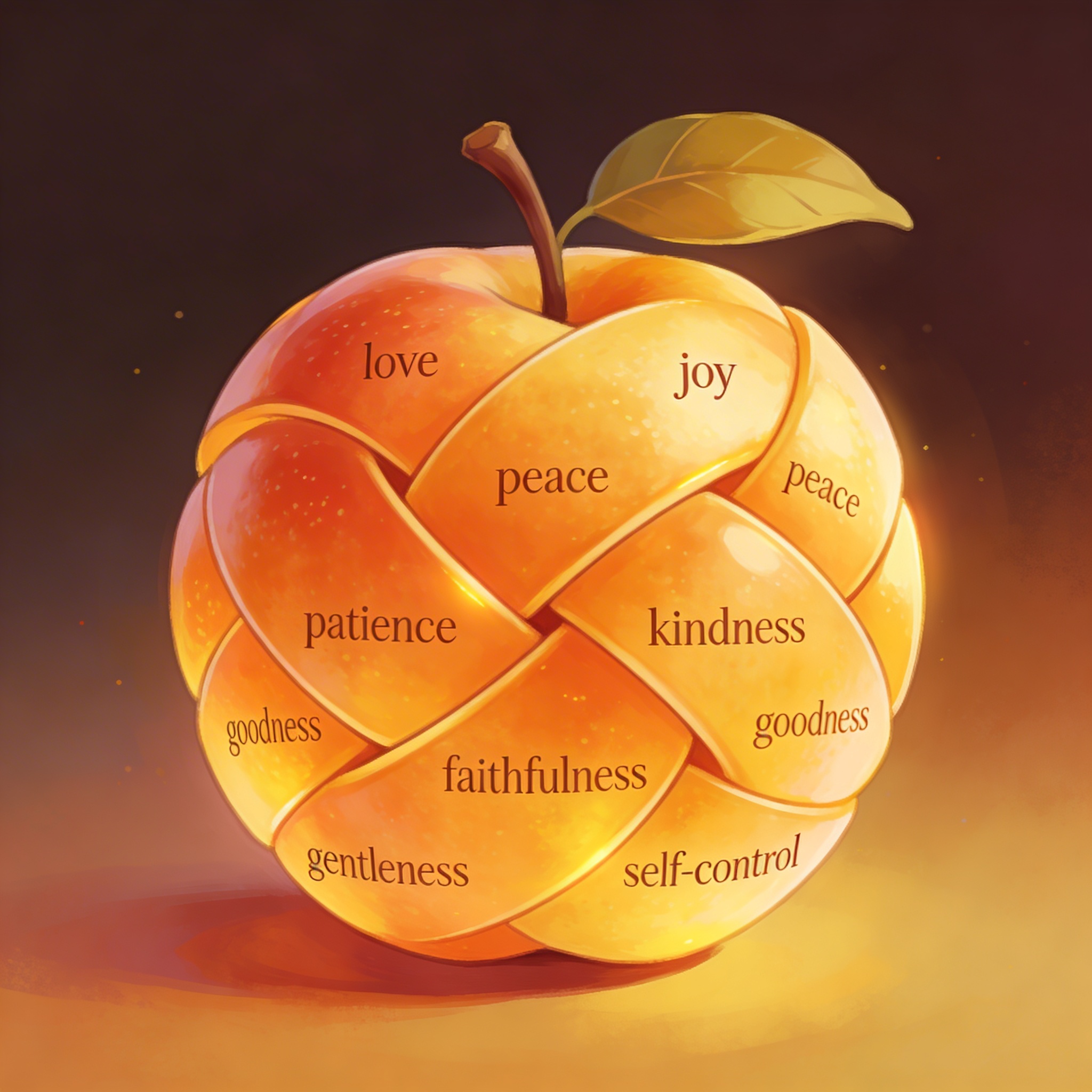
Yes, the fruit of the Spirit is our main dish for today. We've created this course as a full-course meal.
This isn't a short mini-course. This is the real deal. The fruit of the Spirit is just too important a topic to rush through. We need to take our time.
Each lesson has a quiz. At the end, we have the desert. It's a "Final Exam" to see what you remember from all the lessons. I guess you could say it's more like fruit salad that desert.
But I digress.
You don't have to take the quizzes or exam. But it will help you remember the material. You learn more when you're tested. God does the same thing with us (see James 1:2-3).
Let's get into the lesson.
Course Flow: The Fruit of the Spirit
Start with the works of the flesh, walk through each aspect of the Fruit of the Spirit, and finish with the Final Exam.
Galatians 5:19–21
Galatians 5:22
Galatians 5:22
Galatians 5:22
Galatians 5:22
Galatians 5:22
Galatians 5:22
Galatians 5:22
Galatians 5:23
Galatians 5:23
Galatians 5:23
The Fruit of the Spirit Is NOT Confusing!
Before we get into the course, we need to have "the talk."
No, not that talk! The talk about the confusion surrounding the fruit of the Spirit.
Some people think these are individual attributes that can stand alone. But that simply isn't true.
The fruit of the Spirit is NOT individual fruits. Granted, fruit can be singular or plural. But the idea isn't the fruits of the Spirit but the fruit of the Spirit. There's a big difference between the two, as we'll see.
All of these flow from the Spirit at the moment of salvation. What does this mean?
The fruit of the Spirit is the visible evidence that the Holy Spirit is at work in a believer’s life (Galatians 5:22–23). The reason why Paul lists it as one, unified “fruit” rather than nine separate options is simple.
It's because the Spirit grows a single Christlike character in us. This character shows up in love, joy, peace, patience, kindness, goodness, faithfulness, gentleness, and self-control.
Note: It would be best if you used your own Bible alongside this study for comparison. The list is from the New American Standard Bible 95 and the English Standard Bible, which both use the same list. The references on this page will display the ESV.
What Is This Bite-Sized Study?
In our "Bite-Sized Bible Course," you'll see how each trait reflects the character of Christ in everyday life. Each short section below introduces one facet of the fruit and points toward key passages for deeper study and practical application.
The chart below outlines the course. Details and links are down below.
The Works of the Flesh: An Absolutely Necessary Intro vv. 19-21
Before we can appreciate the beauty of what the Fruit of the Spirit is, we need to face the ugliness of the works of the flesh (Galatians 5:19–21). Paul says these works are “evident." So we probably should know what they are.
Find the full (and very necessary) lesson here.
The Fruit of the Spirit Is Love v. 22
Godly love gives itself for the good of others. This is because God has first loved us and gave us Christ (Galatians 5:22; c.f. 1 John 4:7–10). This love is not mere emotion. It's a steady, self-sacrificing commitment that mirrors Jesus’ command to love one another as He has loved us (c.f. John 13:34–35).
The Fruit of the Spirit Is Joy v. 22
True joy rests in who God is and what He has done, even when circumstances are hard (Galatians 5:22). This joy flows from trusting Christ and His promises. Because of this, believers can rejoice in the Lord always, even when life feels a bit uncomfortable (c.f. Philippians 4:4; 1 Peter 1:8–9).
The Fruit of the Spirit Is Peace v. 22
Real peace comes from being reconciled to God and learning to trust His wise care (Galatians 5:22; c.f. Romans 5:1). It's more than the absence of conflict. It's a settled heart that knows God has made peace through Christ. It also takes comfort in the fact that God will guard our hearts and minds as we bring our worries to Him (c.f. Philippians 4:6–7).
The Fruit of the Spirit Is Patience v. 22
Genuine patience is more than just gritting teeth. It endures with people and circumstances without giving way to sinful anger or despair (Galatians 5:22). This "longsuffering" reflects God’s own patience with us. When is it best demonstrated? When we bear with one another and wait on the Lord’s timing (Colossians 3:12–13; James 5:7–8).
The Fruit of the Spirit Is Kindness v. 22
Christ-like kindness moves toward others with gentle, practical help, even when they don't deserve it (Galatians 5:22). It mirrors the kindness of God. After all, He was pretty kind when He showed His goodness to us in Christ and calls us to be tenderhearted and ready to forgive (c.f. Ephesians 4:32; Titus 3:4–5).
The Fruit of the Spirit Is Goodness v. 22
Godly goodness loves what is right and gladly does what is beneficial for others (Galatians 5:22). This goodness reflects God’s own moral beauty. It also shows itself in integrity, generosity, and a desire to see God honored in every choice (c.f. Romans 15:14; Psalm 23:6).
The Fruit of the Spirit Is Faithfulness v. 22
Biblical faithfulness keeps promises, tells the truth, and stays loyal because God Himself is faithful (Galatians 5:22). As the Spirit works, believers grow into people who can be trusted. They stand firm in their commitments, holding fast to Christ (c.f. Lamentations 3:22–23; Matthew 25:21).
The Fruit of the Spirit Is Gentleness/Humility v. 23
Godly gentleness isn't weakness. It combines real strength with a humble, considerate spirit (Galatians 5:23). It looks like Jesus. He wasn't weak at all! He was gentle and lowly in heart. Gentleness shows in how we restore others, correct with care, and refuse to crush the weak (c.f. Matthew 11:29; Galatians 6:1).
The Fruit of the Spirit Is Self-Control v. 23
Self-control brings our desires, words, and actions under the rule of Christ (Galatians 5:23). This is not bare willpower. It's Spirit-empowered discipline that says no to the works of the flesh and yes to a life that pleases God (c.f. Titus 2:11–12; 1 Corinthians 9:24–27).
The Fruit of the Spirit Is NOT Legalism v. 23
Legalism. Even the world cringes at that word. We as Christians certainly should. Why? Because the Fruit of the Spirit is NOT legalism. There's no set of regulations that can do what the Spirit does!
Final Exam: Show what You've Learned!
Here's "The Big One." The Big Kahuna." "The Great Beyond."
Well, okay. Maybe that's a bit dramatic. But this quiz will go over all the previous lessons. We won't introduce anything new. What we'll do is review all the material from previous lessons in this one.
Fruit of the Spirit Course Lessons
| # | Lesson Title | Focus |
|---|---|---|
| 1 | The Works of the Flesh: An Absolutely Necessary Intro (vv. 19–21) | Why we must face the “works of the flesh” before savoring the fruit. |
| 2 | The Fruit of the Spirit Is Love (v. 22) | Self-giving love that reflects God’s love in Christ. |
| 3 | The Fruit of the Spirit Is Joy (v. 22) | Deep delight in God that outlasts circumstances. |
| 4 | The Fruit of the Spirit Is Peace (v. 22) | Peace with God and a settled, trusting heart. |
| 5 | The Fruit of the Spirit Is Patience (v. 22) | Longsuffering with people and trials without sinful anger. |
| 6 | The Fruit of the Spirit Is Kindness (v. 22) | Gentle, practical help that moves toward others. |
| 7 | The Fruit of the Spirit Is Goodness (v. 22) | Loving what is right and doing what truly benefits others. |
| 8 | The Fruit of the Spirit Is Faithfulness (v. 22) | Trustworthy, steady loyalty shaped by God’s faithfulness. |
| 9 | The Fruit of the Spirit Is Gentleness (v. 23) | Strength under control, patterned after Jesus’ meekness. |
| 10 | The Fruit of the Spirit Is Self-Control (v. 23) | Spirit-empowered discipline over desires and habits. |
| 11 | The Fruit of the Spirit Is NOT Legalism (v. 23) | “Against such things there is no law” – why rules can’t produce this fruit. |
| 12 | Final Exam: Bonus Lesson | Review of all lessons with a quiz to lock it in. |
How the Fruit of the Spirit Grows
The real question is simple but searching. What describes you better? The “works of the flesh” or the “fruit of the Spirit” (Galatians 5:19–23)?
It's true. Followers of Jesus still struggle with sin. But those who belong to Christ have crucified the flesh with its passions and desires (c.f. Galatians 5:24–25).
The fruit of the Spirit grows as we stay united to Christ. Like branches abiding in the true vine, we draw new life and strength from Him (John 15:1–5). As we walk by the Spirit, we no longer gratify the desires of the flesh. The Spirit steadily reshapes our character so that over time Christ’s likeness becomes more and more visible in us (Galatians 5:16–18, 24–25).
Is this who you are? If not, we hope you are by the time you're finished with this course. The fruit of the Spirit is life and health for those who believe in Jesus.
God bless.

Here are more Bite-Sized studies.
The homepage is just a click away.
Check out this resource from Amazon.
Full disclosure: As an Amazon Affiliate, links to Amazon may earn Biblephoria.com a commission on qualifying purchases. This is just one of the things we do to support this cause. Thank you for your support.
Please Support Us
Your gift helps fund Biblephoria's free online courses and study materials.
Give NowRecent Articles


-
How Do I Obey God? Lesson 3
May 26, 26 08:41 PM
 How do I obey God? I mean, if I want to do it right, where do I start? Is there a right or wrong answer to this? Let's find out together.
 -
Can God Forgive My Sins?
May 19, 26 06:11 PM
Can God forgive my sins? Can He scrub away the guilt I feel and give me what I need? Forgiveness? Let's discover the answer to these questions together. -
Why Do I Feel Guilty?
May 07, 26 12:48 AM
Have you ever wondered "Why do I feel guilty?" Guilt is a constant in the human condition. But where does it come from? What takes it away? Let's find out.




Find our Privacy Policy and User Agreement here.