
Please Support Us
Your gift helps fund Biblephoria's free online courses and study materials.
Give Now- Home
- Free Online Bible Study Courses
- The Fruit of the Spirit Course
- Can the Fruit of the Spirit Be Faked?
Can the Fruit of the Spirit Be Faked?
Lesson 11 -- Fruit of the Spirit
(Bite-Sized Bible Course)
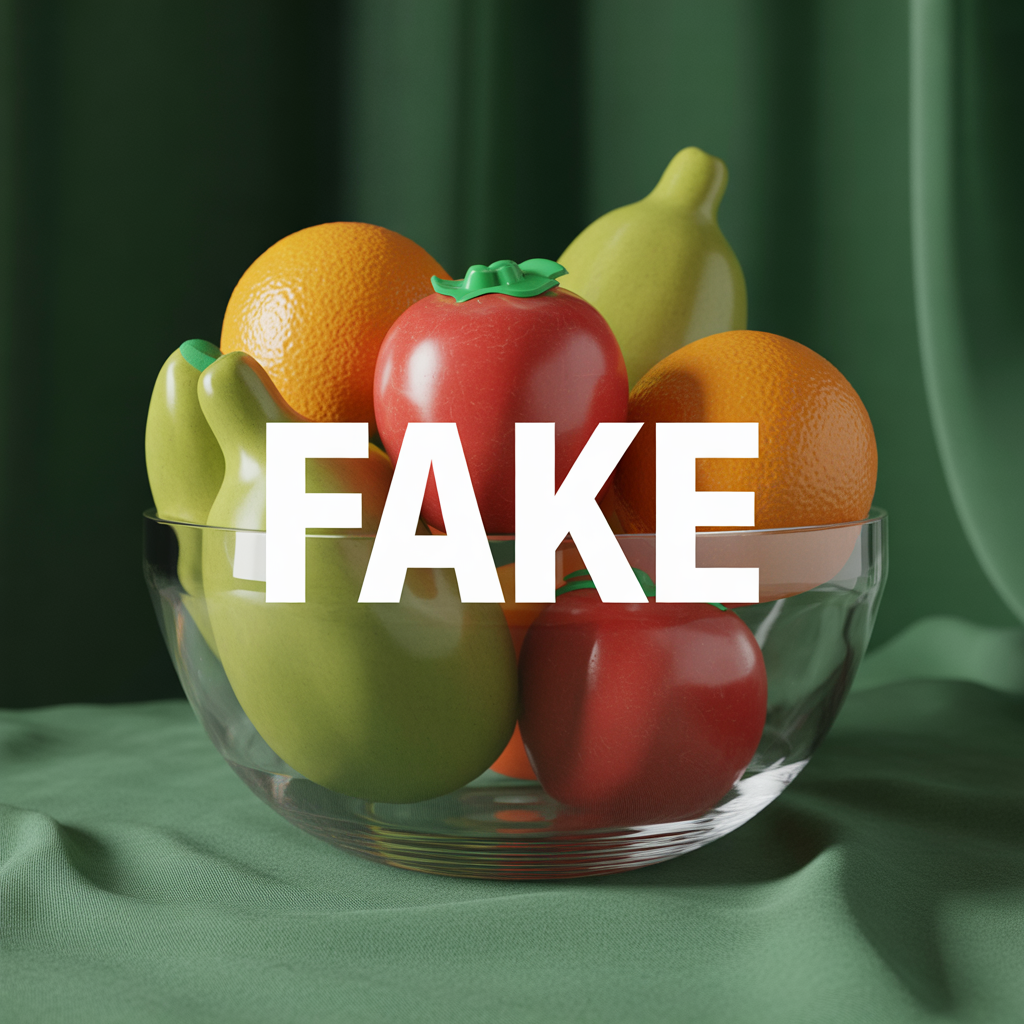
As we draw this course on the Fruit of the Spirit Course to a close, we can honestly say we know what it is. It's a product of the Holy Spirit. He produces that fruit that we, in turn, enjoy.
But can't we get the same results if we try hard? What if we obey the law on our own? Through intense resolve, can we fake the Fruit of the Spirit and make it the "fruit of our effort"?
That's what we'll tackle in this penultimate lesson in our Fruit of the Spirit Course. Before we do, if you haven't taken the other lessons in this series, do that first. This course is meant to be taken in order.
Also, we've provided a quiz to test you on the content for this page. It will really help you master the material.
Let's see if we can fake the Fruit of the Spirit.
Can the Fruit of the Spirit Be Faked?
Most of us know how to “act Christian” when we need to. We can smile at the door. We nod at the right places in a sermon. We even sound patient or kind while our hearts are tight and tired.
That raises a sharp question. Can the fruit of the Spirit be faked (Galatians 5:22–23)? If so, how?
Paul’s little phrase at the end of the list—“against such things there is no law”—helps us see why the answer is both simple and searching. The fruit of the Spirit cannot be recreated by human effort. Why? Because it's exactly what the law approves and yet cannot produce on its own.
What “No Law” Really Means

When Paul says what he does about the law, he's first saying that the law brings no charges against this fruit (Galatians 5:23). All the qualities in the Fruit of the Spirit fully line up with what God’s law was always aiming at. It was always meant to motivate people to fulfill the whole law. It was direction to love God with heart, soul, mind, and strength, and love their neighbor as themselves (Matthew 22:37–40).
Yet, people could never perfectly fulfill the whole law. Because of that, the Spirit has to fulfill the law in our hearts in a supernatural way. This is a positive application of a law that normally condemns (Galatians 3:10–13).
In that sense, the fruit of the Spirit is life lived in such harmony with God’s will that the law has nothing negative left to say. We live out the law because it's already part of our spiritual makeup (Jeremiah 31:33; Hebrews 8:10; Hebrews 10:16).
But in the flow of Galatians, the same phrase quietly exposes the law’s limits. Throughout the letter, law and flesh go together. The law is good. The problem is that the flesh can't keep it.
What's the result? It's slavery, curse, and condemnation when people depend on the law to make them right with God (Galatians 3:10–12; Galatians 4:21–31).
The law can describe love, joy, and holiness. It can also condemn the works of the flesh. One thing it can't do is change a heart of stone into a heart of flesh.
That's why Paul contrasts being “under the law” with being “led by the Spirit.” He says that if we are led by the Spirit, we are not under the law (Galatians 5:16–18).
Put those pieces together and a twofold truth emerges:
- The Fruit of the Spirit is the kind of life the law always approved and never condemned.
- This fruit is also something the law itself never had the power to produce, because the flesh was too weak.
What the law could not do, God has done in Christ and by His Spirit. When faith is applied, the righteous requirement of the law finds its intended completion in those who do not walk according to the flesh but according to the Spirit (Romans 8:3–4).
Why Legalism Can Only Produce Fake Fruit
That's where legalism shows its true weakness. Legalism tries to deal with the works of the flesh by piling on rules and pressure. It tells us that we can be good enough. If we simply try harder, obey more carefully, or build enough fences around God’s commands, we will eventually become loving, joyful, and pure.
At best, that may restrain some outward behaviors for a time. But it can't create love for God, joy in Christ, or peace that survives suffering. It can only staple plastic fruit onto a tree that is still rooted in self.
And plastic fruit doesn't taste nearly as sweet as the real thing.
Church life shouts this reality. It's possible to learn Christian vocabulary and habits and still miss the point. Legalism finds its drive mainly through fear, pride, or the desire to look good.
Looks are everything to the legalistic. It's possible to appear gentle while seething inside. Some are good at showing a kind of “self-control” that is really just about maintaining an image.
That kind of “fruit” depends on human effort and falls apart the moment the cloud of ease lifts from life. That fake fruit looks like the real thing. The reality is that it doesn't grow from faith in Christ or from the Spirit’s work in the heart.
That fruit is rotten from the beginning, to its very core.
How Real Fruit Actually Grows
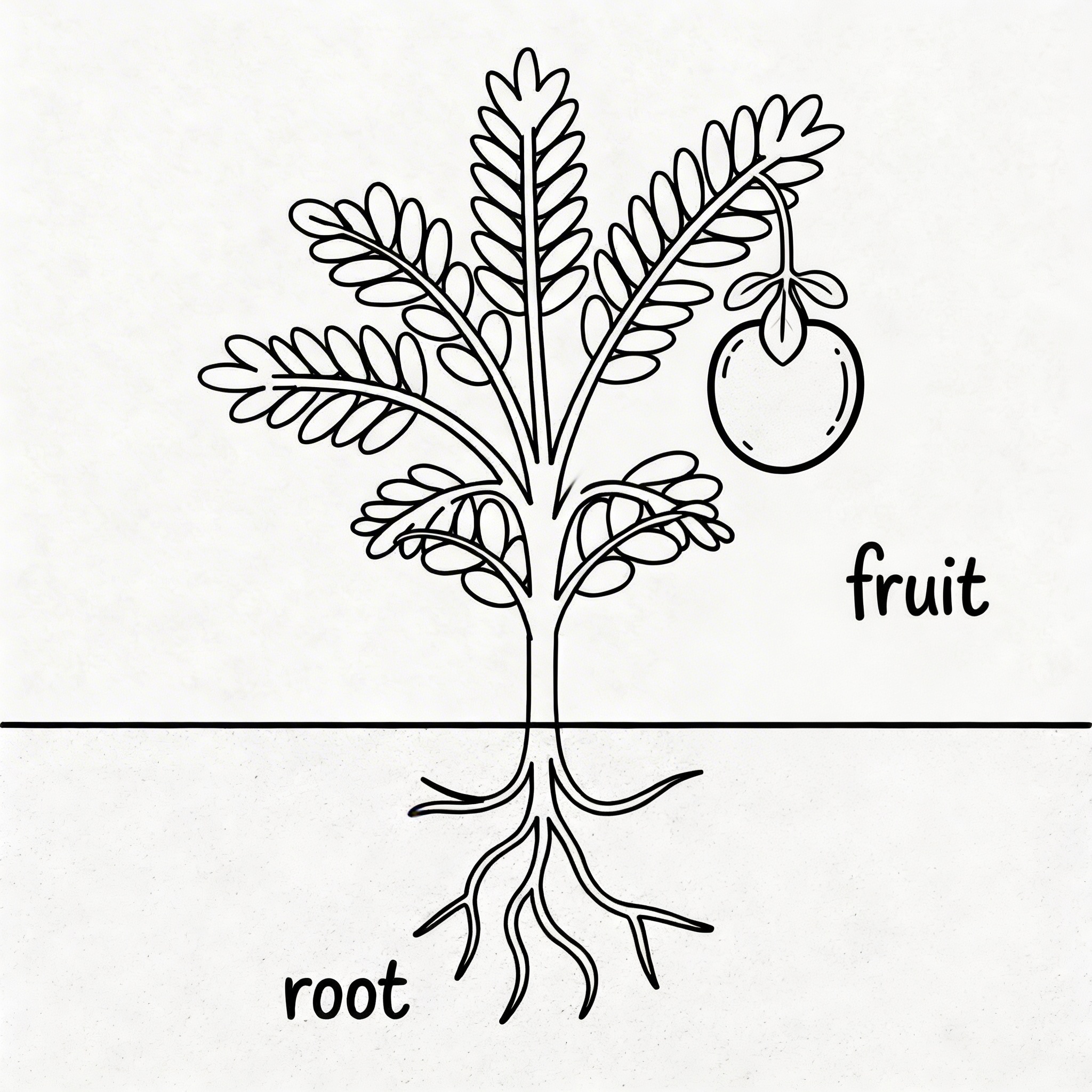
Real fruit grows differently. It begins with God’s gracious work, not our performance.
Those who belong to Christ have crucified the flesh with its passions and desires. They live because they have been joined to Him by faith. Now they naturally hear the call to walk by the Spirit day by day (Galatians 2:20; Galatians 5:24–25). As they do, the Spirit quietly produces in them what the law always pointed to but could never supply. It produces genuine love, joy, peace, patience, kindness, goodness, faithfulness, gentleness, and self-control (Galatians 5:22–23).
That means it isn't a matter of whether the Fruit of the Spirit can be faked. It boils down to another simple question. “Am I trying to make myself look spiritual by law-like effort.
What we should ask is, "Am I trusting the Spirit to do what I cannot?” One is very wrong. The other is very right.
In practice, the difference often shows up in where we run when we fail. Legalism drives us back to ourselves, to more promises, more grit, more hidden shame. The gospel drives us back to Christ. It spurs us to confess sin, receive forgiveness, repent in humility and ask the Spirit again to bear His fruit in us.
A Simple Way to Respond
So maybe you've been relying on your own strength to be a "good person." How should you respond to this? It's actually simple.
Put your trust in Christ. He's the only one who can give you access to the Holy Spirit and His fruit. Only God is good. He's the only One who can make you good.
If you're already a Christian and are struggling. Here are some actionable steps to take:
- First, ask where you are most tempted to rely on rules, routines, or image to prove you are growing, instead of relying on the Spirit.
- Second, bring that specific area to God in prayer. Admit that you cannot recreate the fruit of the Spirit by your own effort.
- Third, thank Him that there is now no condemnation for those who are in Christ Jesus (Romans 8:1).
- Finally, ask Him to make the fruit of the Spirit more real in areas where you struggle.
Don't get me wrong. There's nothing wrong with forming habits, leaning on human accountability, or creating disciplines for yourself. Those can be wonderful tools that God can use to create more fruit.
The difference is this. Those are only the means of God's grace, not the source. The law remains a good guide to what love looks like. The fact is that it's no longer your master or your hope.
Remember this. Our confidence rests in the Spirit who does what no law could ever do. He's producing a fruit that no law can condemn and no human effort can truly fake. That's God's grace to us for His glory alone.
God bless.
Lesson 11 Quiz: Can the Fruit of the Spirit Be Faked?
Check what you remember about “against such things there is no law” and real vs. fake fruit.
Spirit
Course

This is the last lesson. Take the Final Exam here.
Click here to go back to the Fruit of the Spirt page.
Homesick? Try our homepage!
Full disclosure: As an Amazon Affiliate, links to Amazon may earn Biblephoria.com a commission on qualifying purchases. This is just one of the things we do to support this cause. Thank you for your support.
Please Support Us
Your gift helps fund Biblephoria's free online courses and study materials.
Give NowRecent Articles


-
How Do I Obey God? Lesson 3
May 26, 26 08:41 PM
 How do I obey God? I mean, if I want to do it right, where do I start? Is there a right or wrong answer to this? Let's find out together.
 -
Can God Forgive My Sins?
May 19, 26 06:11 PM
Can God forgive my sins? Can He scrub away the guilt I feel and give me what I need? Forgiveness? Let's discover the answer to these questions together. -
Why Do I Feel Guilty?
May 07, 26 12:48 AM
Have you ever wondered "Why do I feel guilty?" Guilt is a constant in the human condition. But where does it come from? What takes it away? Let's find out.




Find our Privacy Policy and User Agreement here.