
Please Support Us
Your gift helps fund Biblephoria's free online courses and study materials.
Give Now- Home
- What Is in the Bible?
- Who Is Jesus?
Who Is Jesus?
Who is Jesus? Is He simply a great philosopher? Is He just another bold religious teacher? Is just a man? Or is He more?
Let's find out. Before we do, we've prepared a summary chart to help you digest the information on this page. You'll find it in the next section.
And don't forget to take the Who Is Jesus Quiz at the end. It will help you absorb the content better. After all, you're here to learn. We've tried to make that simple!
With no further ado, let's look at what the Bible says about Jesus.
Who Is Jesus?
| Category | Summary |
|---|---|
| His Deity | Jesus is fully God—eternal, uncreated, and sharing the same divine nature as the Father and the Spirit. |
| His Place in the Trinity | Jesus is the Second Person of the Trinity, equal in essence with the Father and the Spirit, distinct in personhood but one in nature. |
| His Identity as Son & Word | As the Son, He reveals the Father perfectly. As the Word, He is the exact expression of God’s nature—the visible image of the invisible God. |
| His Earthly Life & Ministry | Jesus lived a sinless life, taught with divine authority, performed miracles, cast out demons, healed the sick, and proclaimed the arrival of God’s kingdom. |
| His Death, Burial & Resurrection | Jesus willingly gave His life as the perfect sacrifice for sin, was buried, and rose again on the third day, conquering sin, death, and the grave. |
| His Ascension & Reign | Jesus ascended into heaven, sits at the right hand of authority, intercedes for believers, and reigns as King until His return. |
| How Salvation Is Received | Salvation comes only through faith in Jesus—not by works, rituals, or personal merit. He alone is the way, the truth, and the life. |
Who Is Jesus
So let's answer the question we started with: Who is Jesus? Answering this question correctly is central to understanding the entire message of Scripture.
The Bible presents Jesus as more than just another historical figure or moral teacher. He exists as God Himself in human flesh. He's described as the eternal Son (Revelation 1:8), the divine Word (John 1:1), the promised Messiah (John 4:25–26), and the risen Lord (Matthew 28:1–10) who reigns at the right hand of the Father (Mark 16:19).
Jesus as Fully God

When we ask, "Who is Jesus?", Scripture answers first with His deity. Jesus is eternally God, sharing the same divine nature as the Father and the Spirit. John opens his Gospel by declaring that “the Word was God” (John 1:1).
Jesus Himself affirms His divine identity when He says, “Before Abraham was, I am” (John 8:58). He also fully understands His equality with God (Philippians 2:5–6).
The fullness of God dwells in Him bodily (Colossians 2:9). What does that mean? It means Jesus is not a lesser being or created spirit. He is truly and fully God in every way. There's no other way to understand who Christ is.
Just like no human being is more human than another, Jesus is no more or less divine than the Father and Spirit. Jesus is equal to them at His most basic level.
Jesus in the Trinity
To understand who Jesus is within the Trinity, we must consider the relationship between Father, Son, and Spirit. Jesus is the second Person of the Trinity. That means He is as much a part of the Trinity as the Father and Spirit.
The Bible describes Jesus as the eternal Son. He's distinct in person yet equal in essence with the Father and the Spirit. The Father plans, the Son accomplishes, and the Spirit applies. Jesus is part of those three Persons with one divine nature (Matthew 28:19).
Jesus submits to the Father’s will in His earthly mission (John 6:38). Yet He remains coequal and coeternal, sharing the same divine glory (John 17:5). His function differs from the Father and Spirit. His essence is the same.
Jesus as the Son and the Word
The Bible also calls Jesus the Son of God. This doesn't mean He's created. He's the Son by eternal relationship. When Scripture calls Him “Son,” it means He's divine and one with the Father (John 5:18).
Jesus is also described as the Logos or Word. What does this mean? It means that Jesus is the exact appearance of God. Just like a word sums up a longer definition, Jesus sums up God. As the Word, Jesus created everything (John 1:3). He's also the One who makes the Father known (John 1:18).
When we ask, "Who is Jesus?", it leads us to the One who embodies God’s truth, character, and presence in every way.
Jesus as Human and the Hypostatic Union
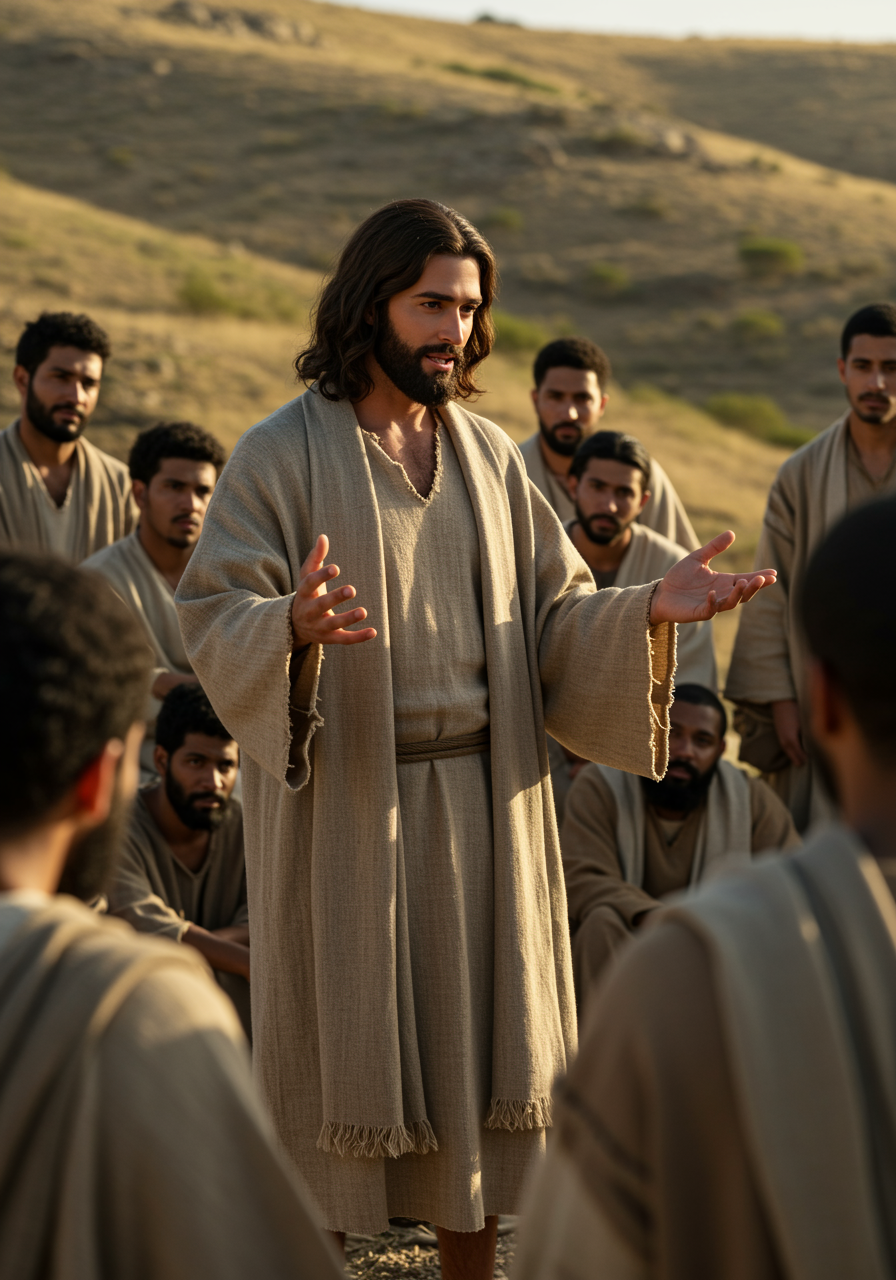
Let's also look at another aspect of who Jesus is. It's important to realize that Jesus is fully human (Matthew 1:23; Luke 2:52; John 4:6).
Yes, you heard that right. Jesus is fully human. Yet He is also fully God (John 1:1; Colossians 2:9).
Wait! How can Jesus be both fully God and fully human at the same time? That means He's 100% God. It also means He's 100% human. How can He be both? That would make Him 200%! That sounds like two beings, not one! But Jesus is only one human being, at least that's what it seems like.
That's impossible, right? I mean, the math doesn't match, does it? How can this be?
The simple answer?
We don't know. The idea is called the hypostatic union and remains a mystery to us (Philippians 2:6–8; Hebrews 2:14). But that's okay. We don't need to know everything. We just need to know what God reveals to us (Deuteronomy 29:29).
What does it reveal to us? Jesus is fully divine and fully human (John 1:14; Hebrews 2:17). If anyone can pull that off, God can. And He did.
The Life and Ministry of Jesus
So what did His life on Earth look like? Let's take a look.
Jesus was born of a virgin (Matthew 1:23), lived without sin (Hebrews 4:15), taught with divine authority (Mark 1:22), healed the sick, cast out demons, raised the dead, and proclaimed the arrival of God’s kingdom (Luke 4:43).
His ministry was equally as extraordinary. Here is a clear summary of His ministry work from the Gospels:
- He taught with unmatched authority and revealed the heart of God (Mark 1:22; John 7:16–17)
- He performed miracles that demonstrated divine power and compassion (Matthew 14:14; Mark 6:56)
- He proclaimed the kingdom of God and called people to repentance and faith (Mark 1:14–15)
- He confronted evil, cast out demons, and brought freedom to the oppressed (Mark 1:34; Luke 4:18)
- He discipled followers who would carry His message to the world (Matthew 4:19; Matthew 28:19–20)
His Death, Burial, and Resurrection
What's the best part as we answer the question, "Who is Jesus?" It's His saving work.
Jesus willingly gave His life as the perfect sacrifice for sin (John 10:18). He died on the cross (Mark 15:37), was buried (Mark 15:46), and rose again on the third day (Luke 24:6–7). His resurrection is the ultimate declaration of His deity (Romans 1:4) and the guarantee of eternal life for all who believe (John 11:25–26).
What did this part of His stay on Earth look like? It was pretty exciting. Let's take a look:
- He died as the spotless Lamb of God, bearing the sins of the world (John 1:29)
- He was buried, confirming the reality of His death (Mark 15:46)
- He rose again, conquering sin, death, and the grave forever (Luke 24:6)
His Ascension and Reign
After His resurrection, Jesus ascended into heaven (Acts 1:9). When He got there, He was given His rightful position at the right hand of the Father. This is the most important position of ultimate authority in all creation (Hebrews 1:3).
This final piece shows Him not only as Savior but as reigning Lord. He intercedes for His people (Romans 8:34) and will continue to rule until all things are placed under His feet (1 Corinthians 15:25). He will come back as He said He would (Acts 1:11).
So Who Is Jesus Anyway?

So who is Jesus? He is God the Son, the eternal Word, the promised Messiah, the perfect Savior, the risen Lord, and the reigning King. His life, death, resurrection, and ascension reveal the fullness of God’s love and power. Every part of Scripture points to Him, and every believer’s hope rests in Him alone.
And that's the point. The reason why Jesus shows up so prominently is that He's the center of God's plan (Colossians 1:15–20). He's the only way to God (John 14:6). Salvation comes only through faith in Him (Ephesians 2:8-9).
Have you believed in Jesus? Do it today. You will praise God forever if you do. God bless.
WHO IS JESUS? — QUIZ
Certificate of Completion
This certifies that you have completed the quiz on “Who Is Jesus?” and reviewed key truths about who He is and what He has done.
Keep growing in your understanding of the Lord Jesus Christ, true God and true man, the only Savior and King.

Go back to "What Is in the Bible?" to find more Bible studies.
Home, home on the...wait. Here's the homepage
Full disclosure: As an Amazon Affiliate, links to Amazon may earn Biblephoria.com a commission on qualifying purchases. This is just one of the things we do to support this cause. Thank you for your support.
Please Support Us
Your gift helps fund Biblephoria's free online courses and study materials.
Give NowRecent Articles


-
How Do I Obey God? Lesson 3
May 26, 26 08:41 PM
 How do I obey God? I mean, if I want to do it right, where do I start? Is there a right or wrong answer to this? Let's find out together.
 -
Can God Forgive My Sins?
May 19, 26 06:11 PM
Can God forgive my sins? Can He scrub away the guilt I feel and give me what I need? Forgiveness? Let's discover the answer to these questions together. -
Why Do I Feel Guilty?
May 07, 26 12:48 AM
Have you ever wondered "Why do I feel guilty?" Guilt is a constant in the human condition. But where does it come from? What takes it away? Let's find out.






Find our Privacy Policy and User Agreement here.