
Please Support Us
Your gift helps fund Biblephoria's free online courses and study materials.
Give Now- Home
- What Are Christian Holidays?
- The Sanctity of Human Life
- The Sanctity of Life in Exodus 21
The Sanctity of Life in Exodus 21:22–25
Total transparency? Not all Christians agree with the idea of the sanctity of life, especially in the case of abortion.
Some even find biblical evidence to support this. They say certain texts aren't clear regarding life in the womb. If God really found abortion appalling, He would have made clearer statements in the Bible.
Is this true? Is there biblical evidence that justifies abortion?
Let's take a look by examining one of these disputed texts: Exodus 21:22-25.
The Details of Exodus 21
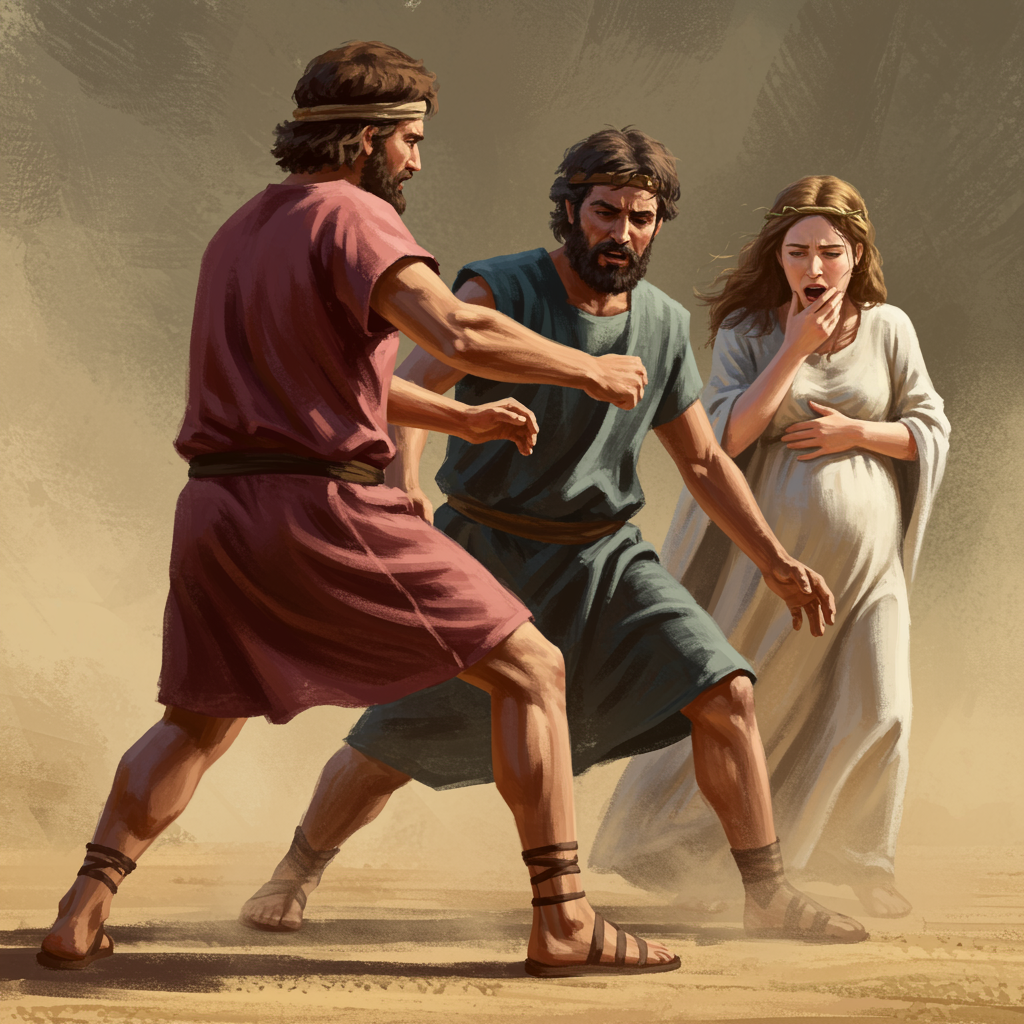
Exodus 21 describes a case where men are fighting, and a pregnant woman is struck so that “her children come out” (Exodus 21:22–25). This verse sits nestled in a series of case laws about bodily injury and assigns specific penalties when human beings are harmed.
This is where the story becomes a little too murky for some. The text states that if there is no further harm, only a fine is imposed.
Then it continues, stating that if there is serious injury, the standard becomes “life for life, eye for eye, tooth for tooth” (Exodus 21:23–25).
This text represents a strong example of the "principle of proportionate justice," which is meant to protect both victims and offenders from exaggerated retaliation.
An Attempt at Disproving the Sanctity of Life
The problem surfaces when people begin interpreting different elements of the passage. Some believe this passage speaks of the life of the mother alone. In this reading, if the woman is struck and miscarries, but she survives, only a fine is imposed. The other scenario outlines a situation where the mother dies. In that case, the offender deserves capital punishment.
According to this interpretation, the child is a secondary legal concern. Any loss of life in view is applied to the mother alone. So it doesn't matter if the child lives or dies. This leads some to believe that the life of the child isn't treated equally with the life of an adult.
In other words, if this is correct, the Bible doesn't deal with the "fetus" as it does with life outside the womb. The conclusion? According to this view, an unborn baby counts less than other human life.
A Closer Look at the Facts

Is this the correct understanding of this passage? Does this conclusively prove that God is okay with abortion? Let's look at the passage more closely.
The key is to pay close attention to the Hebrew phrase “her children come out.” These words combine two words: a common term for “child” and a verb that normally means “to go forth” or “come out.” Although we non-Hebrew speakers may not see the importance at first, a closer look may surprise us.
That particular phrase doesn't deal with death at all. In fact, it's the opposite. That phrase was often associated with live birth rather than miscarriage or stillbirth.
What does this tell us?
If read this way, the text actually supports the sanctity of life. This would indicate that the first scenario is of a premature birth and the second of serious injury or death, whether to the mother or to the child.
In one case, the child is born alive. The "child comes out" prematurely but healthy. No harm, no foul. Only a fine is imposed.
In the other, either the mother or the baby suffers injury or death. The penalty then escalates. It becomes "Life for life."
Why “life for life” Matters
What does this say to us? It shouts a loud defense of the sanctity of life.
Understanding the text this way fits naturally with everything else Scripture says about human life. Other places in the Bible make it clear that life in the womb is known and valued by God as fully human (Psalm 139:13–16; Job 31:15; c.f. Luke 1:41–44).
The “life for life” language sits far more comfortably with the idea that the unborn child’s life is treated with the same legal seriousness as any other human life. There can be no other serious consideration.
Division in the Sanctity of Life Debate
Unfortunately, not everyone agrees. It's true that this interpretation is not universally accepted. Some thoughtful commentators still debate whether the first scenario refers to miscarriage or premature live birth.
Yet the combination of the birth language and the "principle of proportionate justice" strongly supports the conclusion that the law demands a penalty equal regarding all loss of life. This clearly affirms the sanctity of human life even before birth.
The Impact on the Sanctity of Life
So how should we view the sanctity of life after studying Exodus 21?
- First, all human life is sacred. No one is a "throwaway" human in God's economy.
- The Bible confirms God's high view of human life. The fact that we are made in God's image proves this (See Genesis 1:26-27 for more).
- We should be ready with biblical facts so that we can defend the most innocent life that exists on this earth.
If we take these principles into consideration, we see the importance of understanding passages like Exodus 21:22-25 properly. In this way, we glorify God by protecting those who are image-bearers just as we are.
God bless.

Go back to our "Sanctity of Life" page for more on this subject.
The homepage is right around the corner!
Full disclosure: As an Amazon Affiliate, links to Amazon may earn Biblephoria.com a commission on qualifying purchases. This is just one of the things we do to support this cause. Thank you for your support.
Please Support Us
Your gift helps fund Biblephoria's free online courses and study materials.
Give NowRecent Articles


-
How Do I Obey God? Lesson 3
May 26, 26 08:41 PM
 How do I obey God? I mean, if I want to do it right, where do I start? Is there a right or wrong answer to this? Let's find out together.
 -
Can God Forgive My Sins?
May 19, 26 06:11 PM
Can God forgive my sins? Can He scrub away the guilt I feel and give me what I need? Forgiveness? Let's discover the answer to these questions together. -
Why Do I Feel Guilty?
May 07, 26 12:48 AM
Have you ever wondered "Why do I feel guilty?" Guilt is a constant in the human condition. But where does it come from? What takes it away? Let's find out.




Find our Privacy Policy and User Agreement here.