
Please Support Us
Your gift helps fund Biblephoria's free online courses and study materials.
Give Now- Home
- Free Online Bible Study Courses
- Jesus' Words from the Cross
- I Commend My Spirit
I Commend My Spirit: Jesus' Last Words from the Cross
Lesson 7 -- Jesus' Words from the Cross
(Bite-Sized Bible Course)
“Father, into your hands I commend my spirit.” (Luke 23:46)
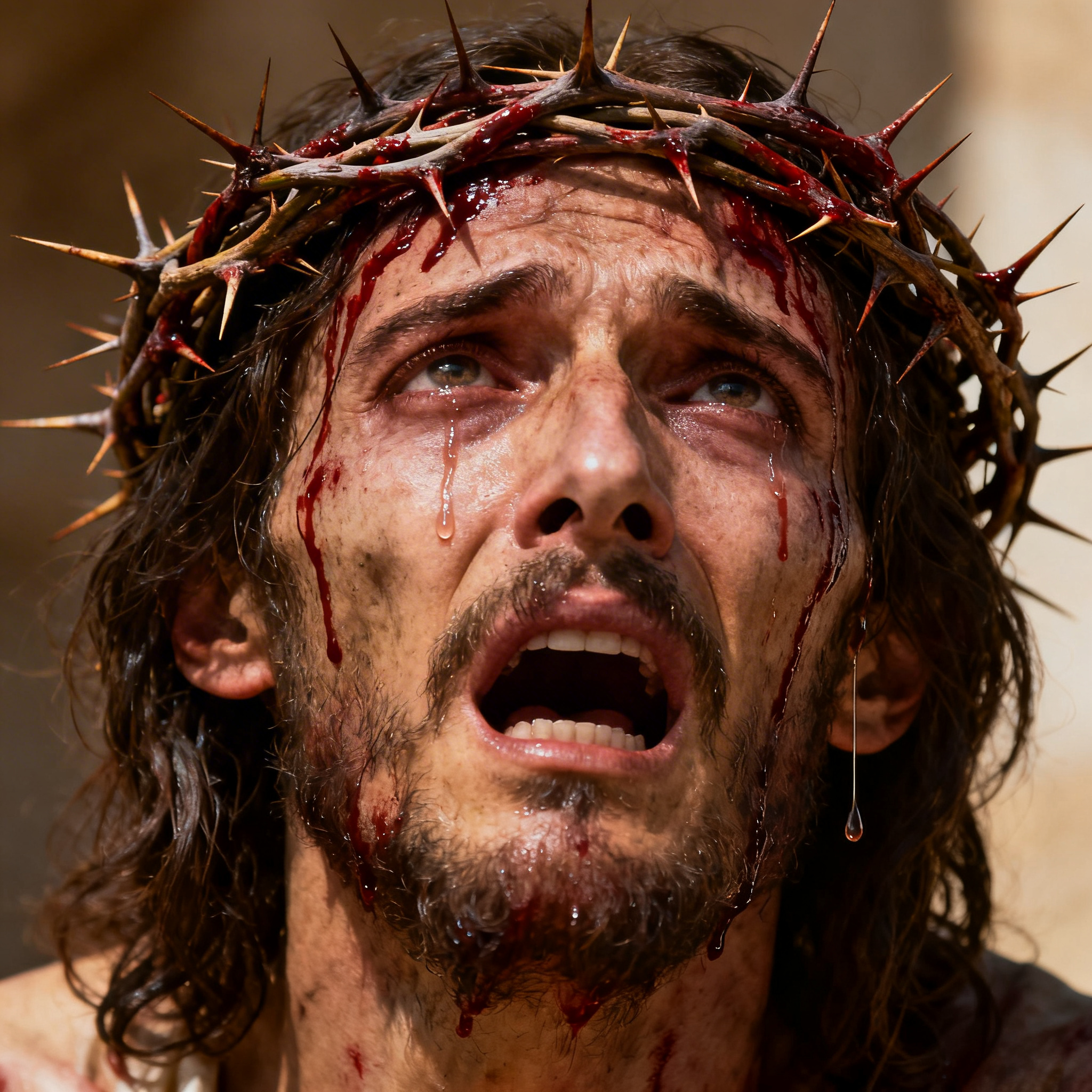
This is it. After hours of agony on the cross, Jesus speaks one last time. Not in a groan. Not in a whisper. With a loud voice that cuts through the darkness. With His final breath, He prays.
Then He dies.
These aren't the words of a defeated victim. They're the confident surrender of the Son to His Father.
In this final lesson in our Jesus' Words from the Cross Bite-Sized course, we'll see what it means that Jesus could say, “I commend my spirit.” How His final prayer can transform the way we face life, suffering, and even death.
A Final Word of Trust
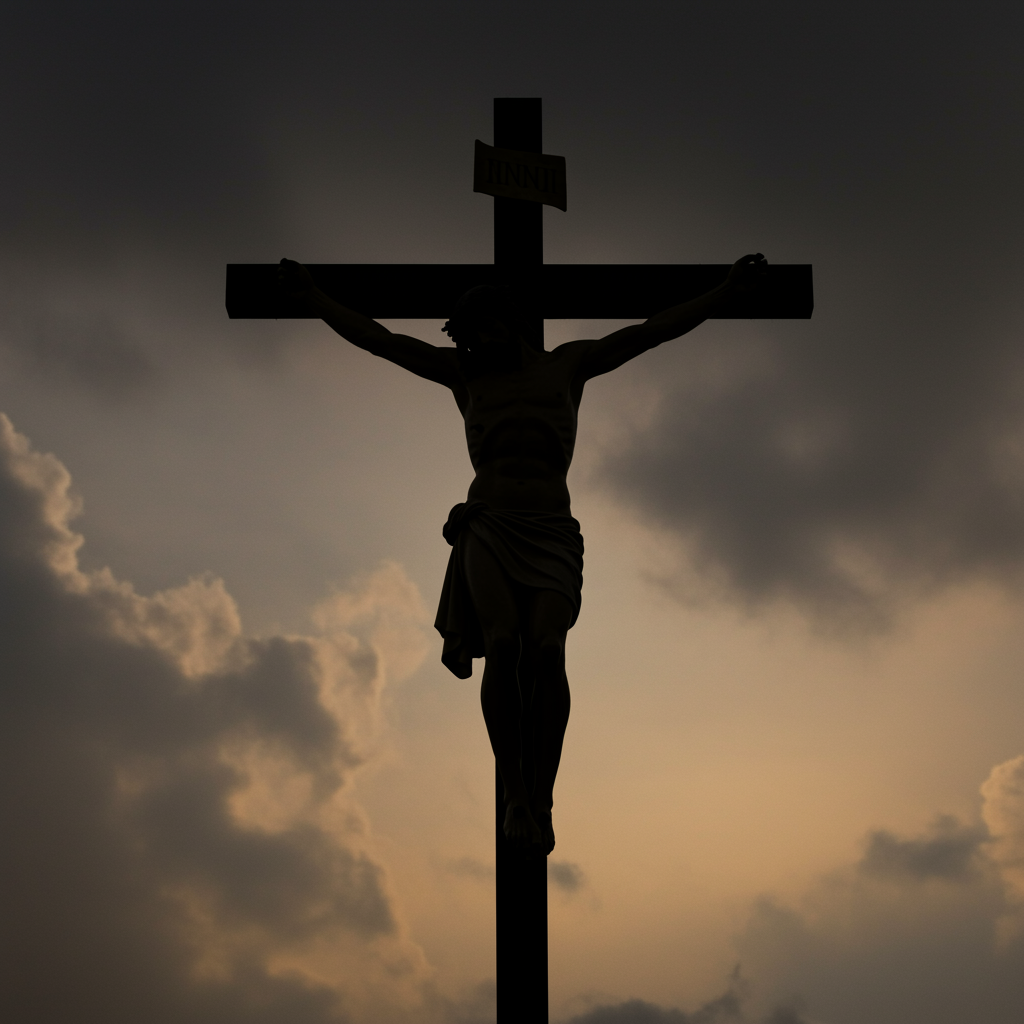
Luke tells us that from noon until about three in the afternoon, darkness covers the whole land. The sun stops shining. The temple's curtain is torn in two (Luke 23:44–45).
Then, at exactly the right moment, Jesus cries out with a loud voice. These are His final words from the cross. “Father, into your hands I commend my spirit.” Having said this, He breathes His last (Luke 23:46).
Notice the word He uses to address God. “Father.” At the beginning of the cross, He prayed, “Father, forgive them” (Luke 23:34). Near the end, in the darkness of bearing our sin, He cried, “My God, my God, why have you forsaken me?” (Matthew 27:46). Now, His finished work brings Him to this moment. That's why He returns to that intimate name.
Father.
Jesus knows full well how this will end. He doesn't simply endure death. He entrusts Himself to the Father who loves Him.
He quotes Psalm 31:5, a psalm of trust. What does it say? “Into your hands I commit my spirit; redeem me, Lord, the God of truth” (Psalm 31:5).
Sound familiar? Jesus quoted most of this the moment before He gave His life. This leads to our next thought.
Willing Surrender, Not Defeat
Luke gives us this little detail of Jesus crying out for a reason. He wants to show us that Jesus remained strong and aware to the very end (Luke 23:46). Jesus wasn't slipping into unconsciousness or overwhelmed by weakness. He chose this moment to lay down His life.
Earlier, Jesus had said that no one took His life from Him. It belonged to Him to give willingly when the time came (John 10:18). Now, on the cross, He proves it.
After fulfilling every prophecy, after finishing the work of redemption, He hands His spirit over to the Father. He doesn't cling to life in fear. He doesn't curse God in bitterness. He willingly surrenders Himself into His Father’s hands.
This isn't resignation. It's confidence. His words tell us that He knows His death isn't the end of the story.
The Father will accept His sacrifice. The Father will receive His spirit. The Father will raise Him from the dead on the third day.
"I Commend My Spirit" -- The Hands That Hold Us
Why did Jesus commend His spirit to His Father's hand? That seems like an odd expression to us. What does it mean?
Hands are a picture of power, protection, and care. In Psalm 31, David commits his spirit to God’s hands because he knows who the Lord is (Psalm 31:1–5). Those very words spill from Jesus' own mouth. In the darkest hour, He places Himself entirely in the Father’s care.
Are God's hands strong enough to take care of us as well? The short answer is, yes.
The Father’s hands are strong enough to receive the spirit of His crucified Son and raise Him in glory. In that same way, they're strong enough to hold us as well. Jesus once said that no one can snatch His sheep out of His hand or His Father’s hand (John 10:28–29).
The same hands that received Jesus’s spirit are the hands that protect your life. They possess your salvation. They hold your future.
We often act as if our lives are in our own hands. We cling tightly to control, safety, and certainty. But Jesus shows us a better way. At the very moment when defeat seems certain, He entrusts everything to the Father.
Trust in the Face of Death
What else do Jesus' words tell us? They teach us how to think about death as believers. Because He died for our sins and rose again, death is no longer the ultimate threat for those who belong to Him.
Our bodies may fail. Our spirits are safe in the hands of the Father.
Stephen, the first Christian martyr, understood this. As wicked men stoned him to death, he prayed that Jesus would receive his spirit (Acts 7:59). He echoed Jesus’s confidence, because he knew the risen Lord would receive him. That's the kind of courage the gospel creates.
We may not know how or when we will die. That's okay. In Christ, we know what will happen when we do. To be away from the body is to be at home with the Lord (2 Corinthians 5:8). The moment we die, God receives our spirits. He has already proven His love and care in this way for us at the cross.
Learning to Live This Way Now
“I commend my spirit” isn't only a dying prayer. It's also a pattern for living. Every day, we are invited to place our whole selves into our Father's hands. Our plans, fears, wounds, and hopes are all secure in Christ.
That means:
- When you're misunderstood, rejected, or treated unjustly, you can entrust your reputation and your heart to Him.
- When you're weary and burdened, you can cast yourself on the One who cares for you.
- When you can't see what God is doing, you can still say, “Father, into your hands I commend my spirit.”
This isn't pretending that suffering is easy. It's choosing to believe in your Father. He's good, wise, and in control even when nothing feels safe.
Jesus didn't ignore the pain of the cross. He felt it fully. Yet with His final breath, He rested Himself in the Father’s care.
Your Turn to Say "I Commend My Spirit"

So what does this mean for you right now?
First, if you've never trusted Christ, His final words are a call to you. The Savior who said, “I commend my spirit,” had just finished paying the full price for sin.
Forgiveness and eternal life are now open to all who turn from their sin and trust in Him. He died willingly, trusting that the Father would receive Him so that God would receive your spirit as well.
Second, if you already belong to Christ, His last prayer is an invitation to renewed confidence. You don't have to hold your life together by sheer effort. You must place yourself into your Father’s hands again and again. You can echo Jesus’s words in a hundred small ways every day.
In prayer, in obedience, in surrender.
The One who said, “I commend my spirit,” is now risen and reigns. He suffered, just like we do. He died, like human beings do. He knows what it is to trust the Father completely.
And He stands ready. By His Spirit, He will help you entrust yourself to the same Father who never fails.
Rest in those caring hands. God bless.
Lesson Quiz: Jesus' Words from the Cross
Test what you’ve learned about Jesus’ final words, His willing surrender, and what it means to entrust yourself to the Father.
Bible
Course

This is the last lesson. Find them all here!
Going home for the holiday? Great! Here's the homepage!
Full disclosure: As an Amazon Affiliate, links to Amazon may earn Biblephoria.com a commission on qualifying purchases. This is just one of the things we do to support this cause. Thank you for your support.
Please Support Us
Your gift helps fund Biblephoria's free online courses and study materials.
Give NowRecent Articles


-
How Do I Obey God? Lesson 3
May 26, 26 08:41 PM
 How do I obey God? I mean, if I want to do it right, where do I start? Is there a right or wrong answer to this? Let's find out together.
 -
Can God Forgive My Sins?
May 19, 26 06:11 PM
Can God forgive my sins? Can He scrub away the guilt I feel and give me what I need? Forgiveness? Let's discover the answer to these questions together. -
Why Do I Feel Guilty?
May 07, 26 12:48 AM
Have you ever wondered "Why do I feel guilty?" Guilt is a constant in the human condition. But where does it come from? What takes it away? Let's find out.





Find our Privacy Policy and User Agreement here.