
Please Support Us
Your gift helps fund Biblephoria's free online courses and study materials.
Give Now- Home
- Free Online Bible Study Courses
- What is Easter Sunday?
- The Easter Story in the Bible
The Easter Story in the Bible
Lesson 2 -- What Is Easter Sunday?
(Bite-Sized Bible Course)
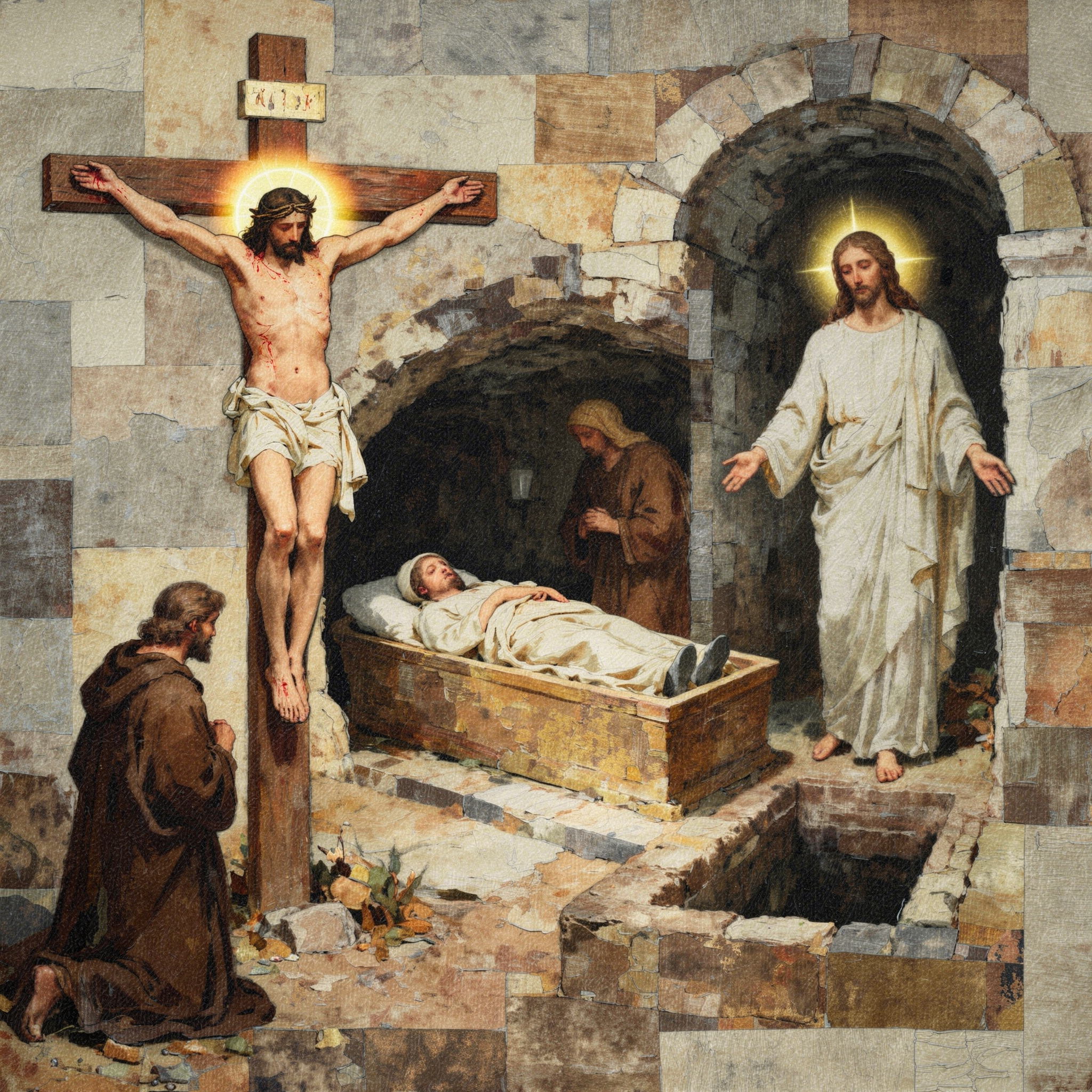
The Easter story in the Bible. It's the heart of the Christian message. It tells how Jesus gave Himself for sinners, truly died, was buried, and rose again in victory on the third day (1 Corinthians 15:3–4). From start to finish, it shows God’s love, justice, and power at work for our salvation (Romans 5:8).
Who wouldn't like a story like that? It has drama. It has pathos. And it changes lives.
How do we know that? That's what we'll be studying next.
Before we do, make sure to take the quiz at the end of this lesson. Lesson 2 is part of a larger study on the question What Is Easter Sunday? It's meant to stick with you. This lesson is certainly one of the most important details in that study.
So make sure to take the quiz.
Enough of that. Let's jump into the content.
The Road to the Cross
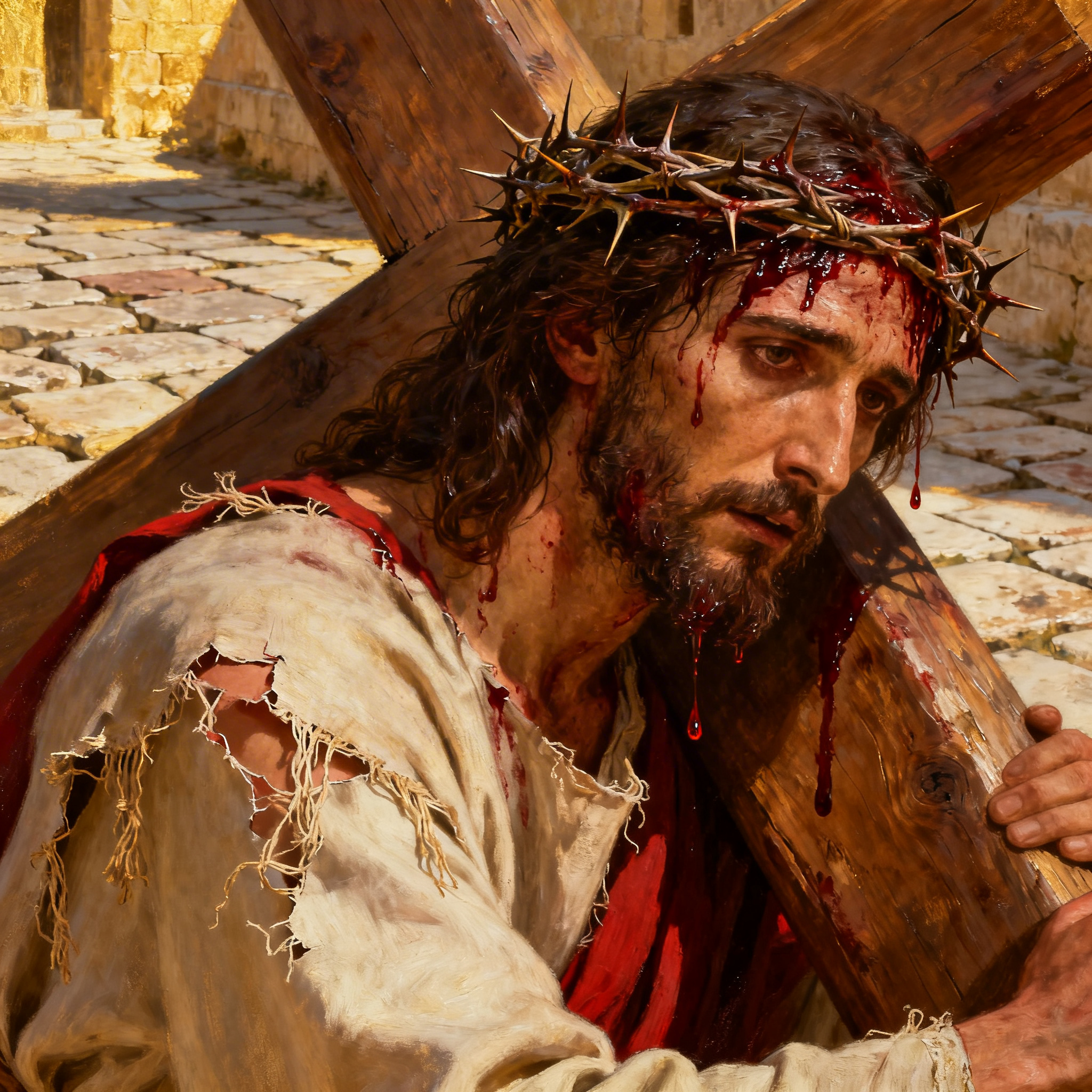
Jesus' death wasn't accidental. He set His face toward Jerusalem. He knew what awaited Him there (Luke 9:51).
He told His disciples that someone would betray Him. Because of this, He would be condemned, mocked, flogged and killed.
I can't imagine the shock the disciples must have felt. Jesus would die?
But that isn't where the story would end. Jesus continued.
He would be raised on the third day (Mark 10:33–34).
On the night before His crucifixion, Jesus shared the Passover meal with His disciples. At that table, He took bread and said it was His body given for them, then took the cup and said it was the new covenant in His blood (Luke 22:19–20).
What was He doing? He wanted to show them that His death would be a sacrifice to take away sin (John 1:29; Hebrews 9:26).
It would be triumph, not tragedy.
After the meal, Jesus went to Gethsemane to pray. There He wrestled in deep anguish. Yet He submitted fully to His Father’s will. It wasn't His desire that was important. It was all about the Father's plan, His will (Luke 22:42).
While Jesus prayed, a crowd arrived, led by Judas, one of His own disciples. This man came to betray Him with a kiss (Matthew 26:47–49).
Jesus on Trial
What a grueling night for the Son of God!
From Gethsemane, they took Jesus to a series of illegal trials through the night. The religious leaders accused Him of everything they could think of, even blasphemy (Matthew 26:63–66; John 19:7). They condemned Him and sent Him to Pilate, the Roman governor.
Only Rome could carry out an execution (John 18:28–31).
Pilate questioned Jesus. He found no fault in Him (Luke 23:4). The religious leaders stirred up the crowd. They demanded that Jesus be crucified and that a prisoner named Barabbas be released instead (Mark 15:6–15).
In the end, Pilate gave in to the pressure. What did he do? He handed Jesus over to be flogged and delivered Him to be crucified (John 19:1, 16).
A travesty of justice, to say the least.
The Crucifixion
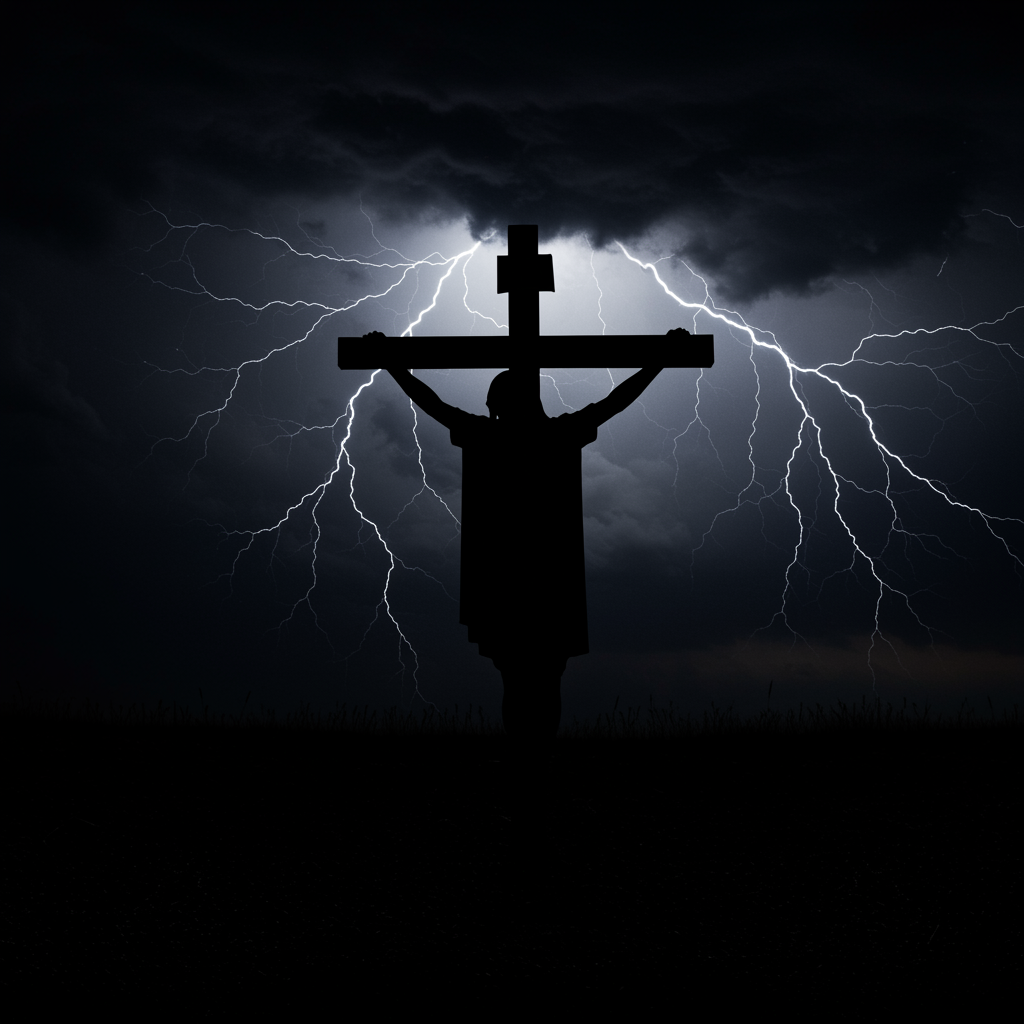
The soldiers mocked Jesus, dressed Him in a robe, and pressed a crown of thorns onto His head (Matthew 27:27–31). Then they led Him out to the place called Golgotha (Mark 15:22). There they nailed His hands and feet to a wooden cross, lifting Him up between two criminals (Luke 23:32–33).
On the cross, Jesus prayed for those who were killing Him. He asked His Father to forgive them (Luke 23:34). He promised paradise to the repentant thief who turned to Him in faith (Luke 23:39–43). He cried out in anguish as He bore the weight of sin and the judgment it deserves (Matthew 27:45–46; 2 Corinthians 5:21).
After hours of suffering, Jesus said, “It is finished,” and gave up His spirit (John 19:30). He truly died. The soldiers confirmed it, and one of them pierced His side with a spear, bringing a sudden flow of blood and water (John 19:33–34). Jesus had fully completed the work His Father gave Him to do (John 17:4).
The Burial of Jesus
A respected council member named Joseph of Arimathea asked Pilate for Jesus’ body (Mark 15:42–43). Together with Nicodemus, he wrapped Jesus’ body in linen cloths with spices and placed it in a new tomb cut out of rock (John 19:38–42).
A large stone was rolled in front of the entrance. The authorities set a seal on the stone and posted a guard to prevent tampering (Matthew 27:62–66). Jesus was not just “mostly dead.” He was buried, sealed in a tomb, and guarded. It looked like the end of His story.
That seemed like the punctuation mark on a decidedly discouraging day. Jesus was dead.
The Empty Tomb
If the story stopped there, it would stand as the greatest tragedy of all time. It certainly was a tragedy.
But it isn't the end of the story.
Early on the first day of the week, as the sun spread its warm, inviting beams, several women went to the tomb with spices they had prepared (Luke 24:1). When they arrived, they found the stone rolled away and the tomb empty (Luke 24:2–3). They were confused and afraid.
Wouldn't you have been? I would have.
Then, angels showed up. That's unusual to say the least. You don't normally see angels at someone's funeral.
Why were they there? To announce that Jesus no longer lay in the grave (Luke 24:5–6).
He is risen!
To make His point, the angel sat on the stone (Matthew 28:2–4). That's kind of funny. He sat there smiling, I'm sure. He knew what had happened and was happy to announce it.
The women heard the message that Jesus had risen, just as He said. The angel instructed them to go quickly and tell His disciples (Matthew 28:5–7).
When Peter and John heard the report, they ran to the tomb. What did they see? The linen cloths, lying there. The face cloth was folded up by itself (John 20:3–8).
The body was gone. The grave clothes left behind. The tomb that had been sealed and guarded now stood open and empty.
Jesus is risen!
What the Easter Story in the Bible Means
The Easter story in the Bible isn't just a moving tale. It's God’s answer to our deepest problem.
On the cross, Jesus bore the sins of His people and took the judgment we deserve (Isaiah 53:4–6; 1 Peter 2:24). He died the death that should have been ours. Because of this, we can receive life with God (Romans 6:23).
God accepted Jesus' sacrifice. He raised Him from the dead, proving that Jesus is the Son of God, His work complete (Romans 1:4; Romans 4:25).
Death couldn't hold Him (Acts 2:24). The grave couldn't keep Him. Death's icy grip pried open (1 Corinthians 15:20–22).
Jesus is risen! And He lives!
Everyone who trusts in Him finds forgiveness. Christ reconciles them and gives them a new relationship with God (Ephesians 1:7; Colossians 1:13–14).
The same power that raised Jesus from the dead now works in those who believe. We get new hearts, new desires, and new hope (Ephesians 1:19–20; 2 Corinthians 5:17).
Living in Light of the Resurrection
What does this do? The Easter story in the Bible reshapes everyday life:
- It means our labor in the Lord isn't empty because Christ has conquered death (1 Corinthians 15:58).
- It means we can face suffering and even death with confidence, knowing that nothing can separate us from the love of God in Christ (Romans 8:35–39).
- It also means we are called to turn from sin and live in a new way. Our union with Christ means we forsake all the old ways and accept newness (Romans 6:4–11; Colossians 3:1–4).
Jesus' resurrection means that He will return one day to judge the living and the dead and make everything new (Acts 17:30–31; Revelation 21:1–5). The Easter story in the Bible points forward to that final day, when God wipes away every tear and death dies for God's people (1 Corinthians 15:51–57; Revelation 21:4).
What Does the Easter Story in the Bible Hold for Us?

The Easter story in the Bible is all about good news. It's a message that demands a response (Mark 1:14–15). Jesus died for sinners and rose again so that all who repent and trust in Him will be saved (Acts 16:31; Romans 10:9–11).
Have you done that? If not, believe in Jesus today. The One who hung on the cross and walked out of the tomb now invites you to come to Him, receive His mercy, and follow Him as Lord (Matthew 11:28–30; John 11:25–26).
If you've already believed, the resurrection is yours. Cherish it. Thank God for it. Enjoy it forever.
God bless.
Lesson 2 Quiz: The Easter Story in the Bible
Test what you’ve learned about Jesus’ death, burial, resurrection, and what the Easter story means.
Bible
Course

What is Easter Sunday? Find out more!
This world may not be your home. But our homepage is still pretty cool!
Full disclosure: As an Amazon Affiliate, links to Amazon may earn Biblephoria.com a commission on qualifying purchases. This is just one of the things we do to support this cause. Thank you for your support.
Please Support Us
Your gift helps fund Biblephoria's free online courses and study materials.
Give NowRecent Articles


-
How Do I Obey God? Lesson 3
May 26, 26 08:41 PM
 How do I obey God? I mean, if I want to do it right, where do I start? Is there a right or wrong answer to this? Let's find out together.
 -
Can God Forgive My Sins?
May 19, 26 06:11 PM
Can God forgive my sins? Can He scrub away the guilt I feel and give me what I need? Forgiveness? Let's discover the answer to these questions together. -
Why Do I Feel Guilty?
May 07, 26 12:48 AM
Have you ever wondered "Why do I feel guilty?" Guilt is a constant in the human condition. But where does it come from? What takes it away? Let's find out.






Find our Privacy Policy and User Agreement here.